
HOME > BLOG > REACTIVITY | April 22, 2026
FOR OWNERS OF A REACTIVE DOG
How to Stop Your Dog’s Barking, Lunging & Snapping For Good — And Train Them To Be Calm, Confident, and Trustworthy
Written by: Jon Somers
Reviewed for professional accuracy by: Matt Cochran, TWC-Certified Professional Dog Trainer
If you take only one thing away from this article, it should be this:
Reactivity is a symptom.
It’s not random.
It’s not a diagnosis of a disease.
It's not a bad habit they just decided to pick up one day.
Barking, lunging, snapping, whining, overarousal, hyperfixation… These are all behaviors that happen for a reason. There is a root cause behind them.
And as long as that root cause is not fixed, the unwanted behaviors will always come back. But if you solve the root cause, then fixing the symptoms becomes easy.
How do I know? Because I learned this lesson myself… the hard way.
4 Years. 3 Trainers.
Nearly $4,000 lit on fire.
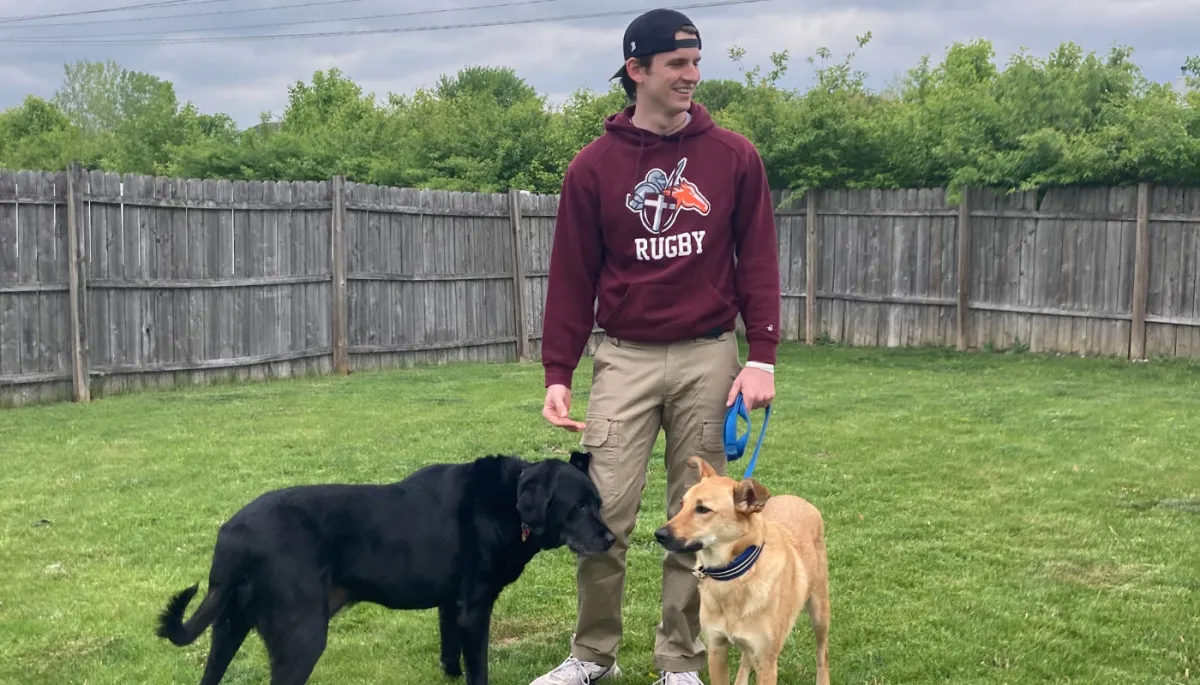
Me 5 years ago with my dogs Gibson (right) and Sam (left) after founding Trail & Bone
My name is Jon Somers, I’m the founder of Trail & Bone.
I started Trail & Bone over 5 years ago to help other everyday dog owners like me who were struggling with their dogs’ aggression or reactivity… even after hiring trainers and behaviorists who promised the world but delivered nothing.
After hiring the 3rd trainer, and still seeing no positive progress with my dog Gibson’s aggression and reactivity… I decided to figure out the answer for myself.
It took a long time, but finally, I did stumble upon the answers I was looking for. And now I can take Gibson anywhere, around anyone… and know that he will behave beautifully.
What I figured out turned out to be almost embarrassingly simple. And it was the opposite of what every trainer I'd hired had told me.
Before I get into it though, I want to step back for a second.
Because to really understand why what I'm about to share works, you first have to understand why the methods you've already tried, haven't.
Why The Methods You've Tried Haven't Worked
If you're anything like most of the reactive dog owners I talk to, you've already gone down at least one of two roads.
The first is the "Redirect. Reward. Repeat" road. Trainers who tell you to flood your dog with cheese, hot dogs, and high-value treats every time a trigger appears. Distract them. Outbid the reaction.
And it kind of works… until it doesn't.
Because eventually your dog hits a moment where the trigger is more interesting than anything in your treat pouch. And the moment a treat stops being enough, you're back to square one.
Even when the treats do win, your dog hasn't actually learned that reacting is wrong. They've just learned that sometimes when a dog appears, cheese appears too. That's it.
Or maybe you went the other direction. The heavy-handed punishment road. Trainers who go straight to e-collars, loud "NO's," and harsh consequences. And for a short time, it will suppress the behavior. But it almost always comes back even worse later.
Both roads fail for the same reason.
They're trying to fix the symptom (the barking, the lunging, the snapping) without ever solving the root issue that's actually causing the reactivity.
That was the breakthrough for me.
Once I learned to stop trying to suppress Gibson's reactions, and instead solve what was driving them… everything changed.
The 4 Roots of Reactivity
1 // Frustration
It was surprising to me at first, but frustration is actually the most common cause of reactivity today, especially in cities and suburbs. It’s surprising because it sounds so mild, but can cause such intense reactions. So a lot of frustrated dogs get misdiagnosed as fearful.
Frustration is simple to understand: it’s when your dog wants to do something (sniff an acorn, pee on a tree, greet a person…) but something else is holding them back (a leash, a fence, a door, a window, etc).
Frustration can build and simmer very quickly. Think of how it feels to have multiple frustrating things happen to you in quick succession. It’s very easy for that to boil up and up and up until you explode.
2 // Fear
This is the obvious one. And though it’s often over-diagnosed, it is still common. Fear is when your dog is genuinely afraid of the trigger. They are scared for their or your safety, and they feel threatened.
And when any being feels threatened, they have 2 choices: Fight or Flight. Reactive dogs choose “Fight.” (or they’re forced to choose “fight” because something else is preventing them from flight. Such as a leash).
3 // Misplaced Genetics
Certain breeds were bred over decades or centuries to guard, herd, chase, and protect. And those instincts don't disappear just because your dog lives in a safe suburb instead of a 1800’s farm!
These dogs aren’t "bad." Their genetics are just expressing themselves in ways that don't work for modern life.
Dogs with reactivity caused by genetics like this, are very, very commonly labeled as “unfixable” by the vast majority of trainers. But it’s not true at all!
4 // Unmet Need For Fulfillment
Some dogs are just... bored. Chronically understimulated. They don't get enough mental exercise, enough physical activity, enough outlets or opportunities to be free to be a dog.
So when they finally do encounter something stimulating (whether positive or negative) — another dog, a person, a squirrel — they explode.
Going crazy barking and lunging actually becomes the highlight of their day. It’s a release valve for all the pent-up energy with nowhere else to go.
Most reactive dogs have more than one of these going on at the same time.
But here's the good news: you don't need to figure out which ones apply to your dog in order to fix it. Because the process is almost entirely the same, regardless.
Now that you know the 4 Root Causes... The next step is to solve them.
How do we do that?
By building the first 5 Pillars of Resolving Reactivity — These are your foundation:
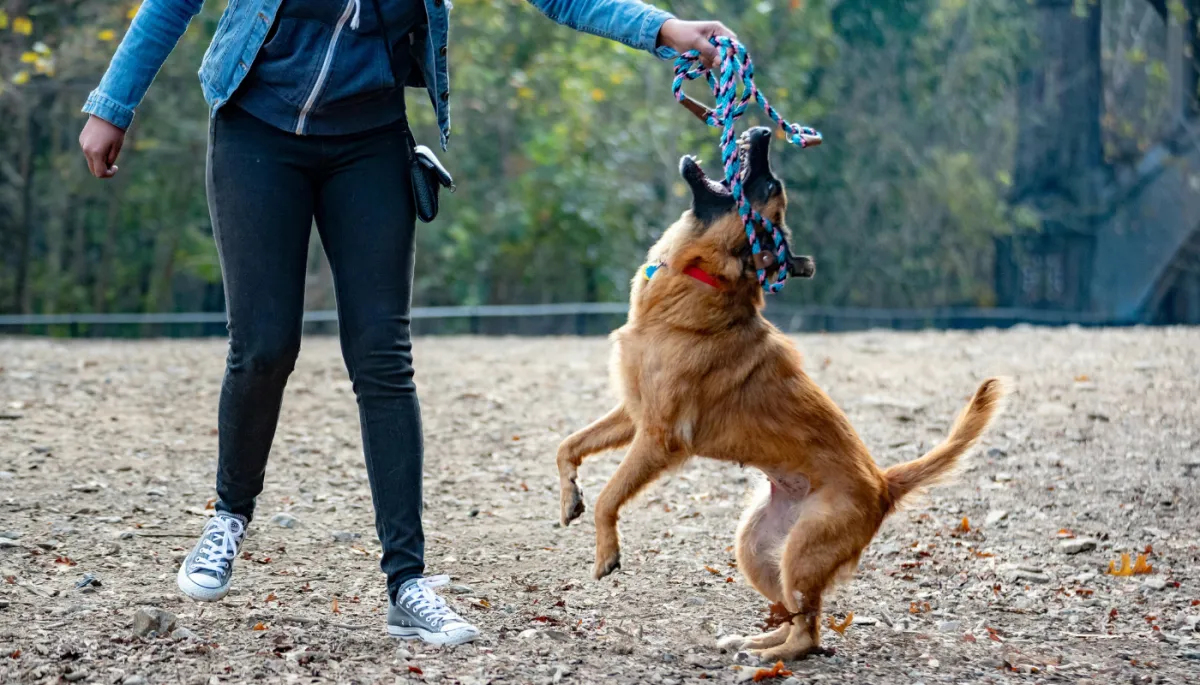
Pillar #1 // Fulfillment First
All dogs need some new and exciting stimulation that burns off their energy and provides an outlet for their biological needs.
A dog constrained to the house, a fenced yard, and a 6-foot leash all day, every day is going to misbehave.
Pillar #2 // Same Team, Same Goal
When people and their dogs go out together, most dogs see their owner as an obstacle standing between them and what they want.
They want to go eat grass, sniff acorns, pee on trees, investigate strangers, and much more.
The owner and the leash prevent them from doing that. The fix is rebuilding that dynamic so your dog sees you as the one getting them what they want. When that flips, behavior softens across the board.
Pillar #3 // “Because I Said So.”
You have to ask yourself:
Who decides whether or not your dog can chase cars? What about eating chicken wings off the sidewalk? Or jumping on your elderly Aunt and Uncle?
If you have the right to decide for your dog that they can’t do those things… even though if it was up to them, they would… then you have authority over your dog. And trustworthy, reliable authority is a responsibility owners owe to their dogs.
And here's what surprises most people: when your dog embraces your authority, they actually become happier. Visibly lighter and more relaxed. Because the burden of making decisions in a world they don't understand gets lifted off their shoulders. They love you for it.
Pillar #4 // Good-Enough Impulse Control.
A huge problem with reactive dogs is that there's zero gap between impulse and action.
Trigger appears → dog explodes. No pause. No thought. Just an instant instinct reaction.
Building even a small amount of impulse control creates that gap for your dog to be able to pause for half-a-heartbeat and think about what they’re going to do, before they do it.
Pillar #5 // A Two-Way Street of Confidence.
There's a saying in dog training: energy flows down the leash. If you're tense, your dog feels it. If you're anxious, your dog mirrors it.
But confidence works the same way. When you're calm and relaxed, your dog picks up on that too. And when your dog is calm and relaxed, that makes you more calm and relaxed too.
True confidence in this context actually has four parts:
1 // Your dog's confidence in themselves. The belief that they can be their true selves and open up and live life to the fullest and nothing bad will happen.
2 // Your confidence in yourself as a dog handler. That you know what to do, how to do it, and can handle whatever comes up.
3 // Your dog's confidence in you. The belief that you've got things under control, so they don't have to take over.
4 // And your confidence in your dog. The belief that they're capable of making good choices, so you don't have to micromanage every action and behavior.
When all four are in place, outings stop feeling like a military mission. You're relaxed. Your dog is relaxed. And you actually start enjoying your time together.
Here's what happens in real life after those 5 foundation pillars are built.
You have a dog who's fulfilled. Who sees you as their teammate, not their obstacle. Who embraces and respects your authority. Who can control their impulses. Who is calm and confident on the leash because you are too.
For a lot of reactive dogs, building those 5 pillars alone gets them 80, 90% of the way there. The reactivity quiets way down on its own, without ever having to address it directly.
But for some dogs, especially the ones who've been reactive for a long time, there's still one more thing standing in the way...
Habit: The Hidden “Half-Cause”
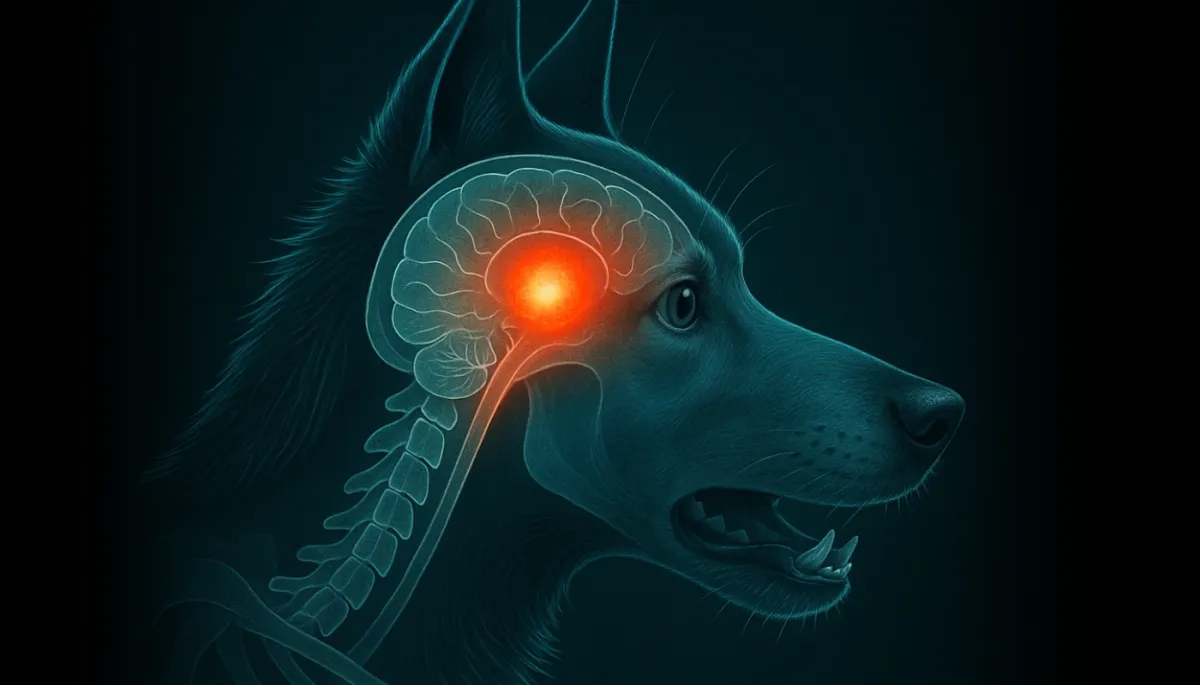
Before we get to pillars 6 and 7, I need to tell you about the “hidden” 5th cause of reactivity.
It's not really a root cause. It's more like a half-cause. And it shows up after the root causes have been solved.
It's habit.
Reactivity, once it's been practiced enough times, stops being purely root-cause driven. It becomes an automatic response that your dog’s brain fires immediately.
You can resolve the frustration, top up the fulfillment, build cooperation and authority and impulse control… and your dog can still fire off at a passing dog out of pure muscle memory.
Habit is why building the foundation isn't always enough on its own. That’s where the final 2 Pillars of Resolving Reactivity come in.
The Last 2 Pillars of Resolving Reactivity
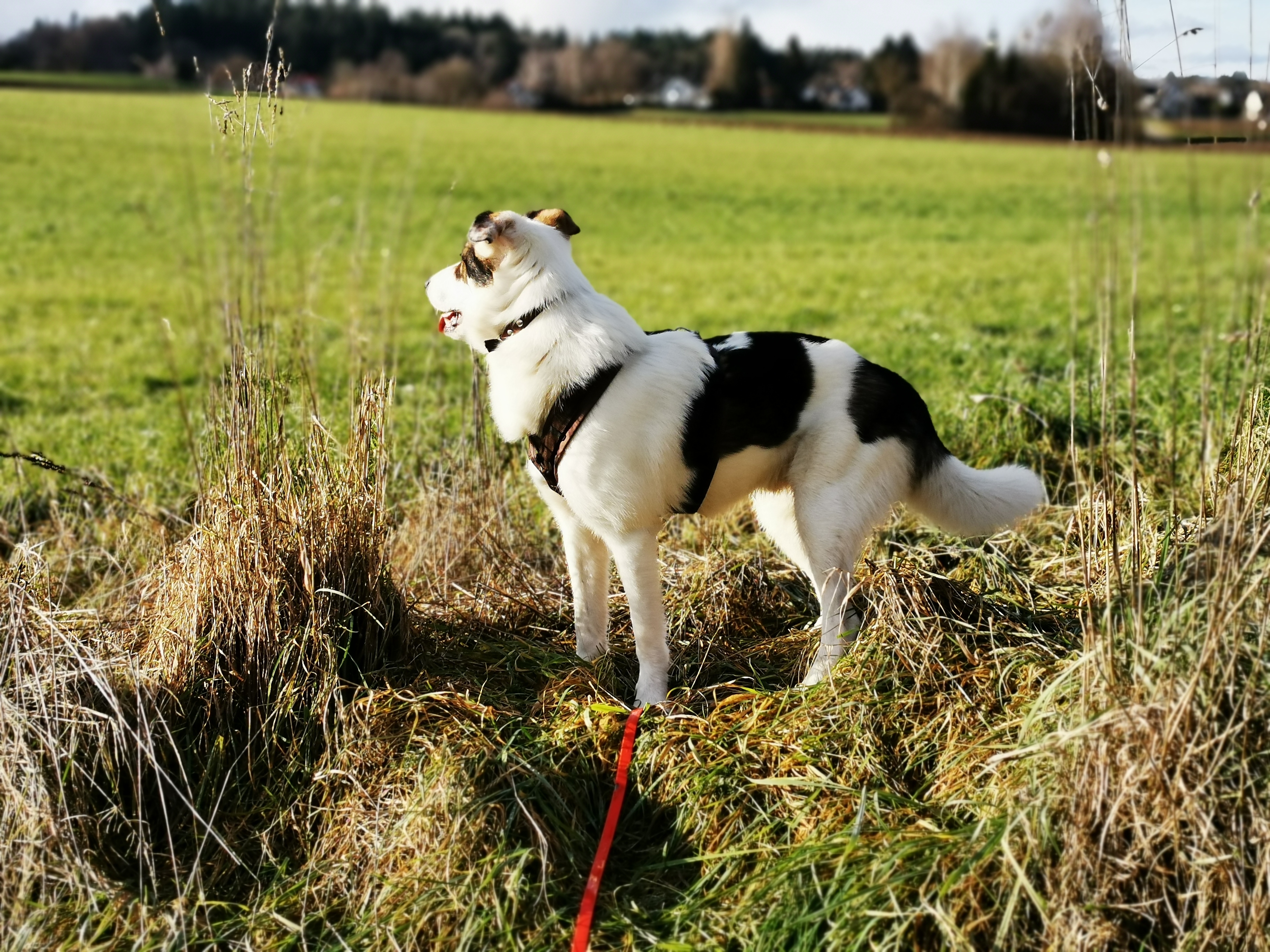
Pillar #6 // The ‘Never Again No’
Most dogs have heard the word "no" thousands of times in their life. And it means absolutely nothing to them.
That's because the meaning of "no" was never actually taught. To most dogs, no is just a noise their owner makes when they're frustrated. There’s no weight behind it.
When your dog makes a choice that is absolutely unacceptable — excessive barking, lunging, snapping, etc… it has to be made clear to them that this behavior is not an option. They have to stop and never do it again.
This is what we call the Never Again No.
And I want to be very clear about what this is and what it isn't. It's not a one-time, super harsh correction that forces your dog into compliance through pain or fear.
It’s not that at all.
The Never Again No is a command you teach your dog. The same way you teach them ‘yes!’ means “you did something good! Do more of that” — the Never Again No means “you did something unacceptable. Never do that again.”
What makes it the Never Again No is your sincerity. You have to genuinely mean it. You're communicating to your dog that they can never do that again.
And because of the authority and trust you've already built, they get it. Maybe not the very first time. But within a few corrections, they understand: "Oh. I'm not allowed to do that."
Pillar #7 // Freedom To Choose
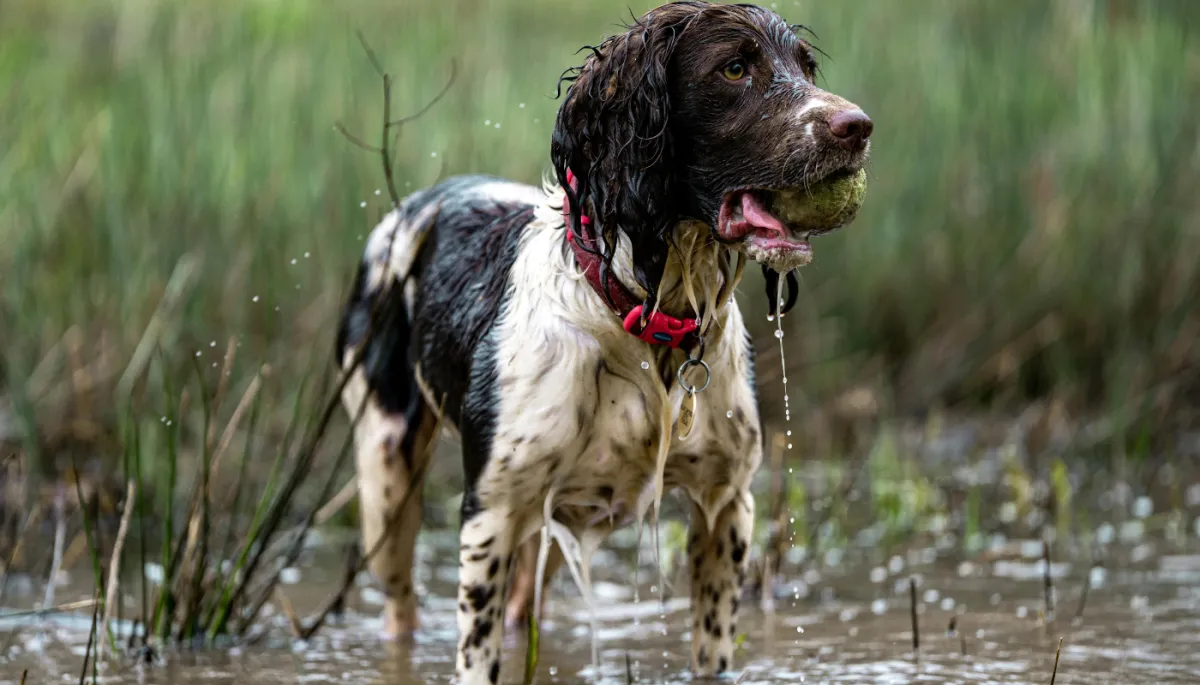
If your dog never gets the chance to make a choice, they never actually learn anything.
You can manage every situation perfectly. Avoid every trigger. Control every variable. All you're doing is delaying the problem forever. Your dog hasn't learned anything. They've just been shielded.
Once the first six pillars are in place, your dog is ready to face real situations.
They're fulfilled. They're cooperative. They embrace your authority. They have impulse control. They have confidence. They trust you. And they know that “no” means “I have to stop what I’m doing right now, and can’t do it again.”
Now it's time to find out if they need that correction. That means giving them space. Letting them see the trigger. And letting them choose how to respond.
Here's where it all pays off.
A lot of dogs, at this point, will straight up shock you. They’ll see the trigger, maybe tense up for a second, and then… just glance at you, and keep moving.
They chose not to react. Not because you redirected them away. Not because you managed the situation. Because they don't feel the need anymore. And every time they make that choice on their own, it gets stronger.
But sometimes, especially early on, they'll still choose wrong. They'll bark. They'll lunge. They'll lose it. And that's okay.
That's exactly why you trained the Never Again No.
Most dogs only need a small handful of real-world corrections before they learn that being reactive isn’t worth it.
And then something really beautiful happens…
They understand you’re telling them they’re not allowed to react. So they're a little confused at first. They've been reacting for so long, they don't know what to do instead. So they look to you for guidance.
And you don't swaddle them. You don't micromanage. You just encourage them, let them know they're doing okay, keep going.
And they figure it out on their own. "Oh, I can just sniff around." "Oh, I can just look the other way." "Oh, I can just... ignore them."
And that's the breakthrough. That's the moment your world together totally opens up.
And that's it. That is the entire process for stopping your dog's reactivity for good.
Once you've worked your way through these 7 pillars, the reactivity is resolved.
Your dog is calm, confident, and trustworthy. You can take them places without dreading what might happen. You can trust them to make good decisions on their own. You actually enjoy your time out in the world together again.
The only question left is the one you're probably asking right now: how do you actually do all this?
All The Training Is Done On 1 Daily Outing: The ‘Total Walk’
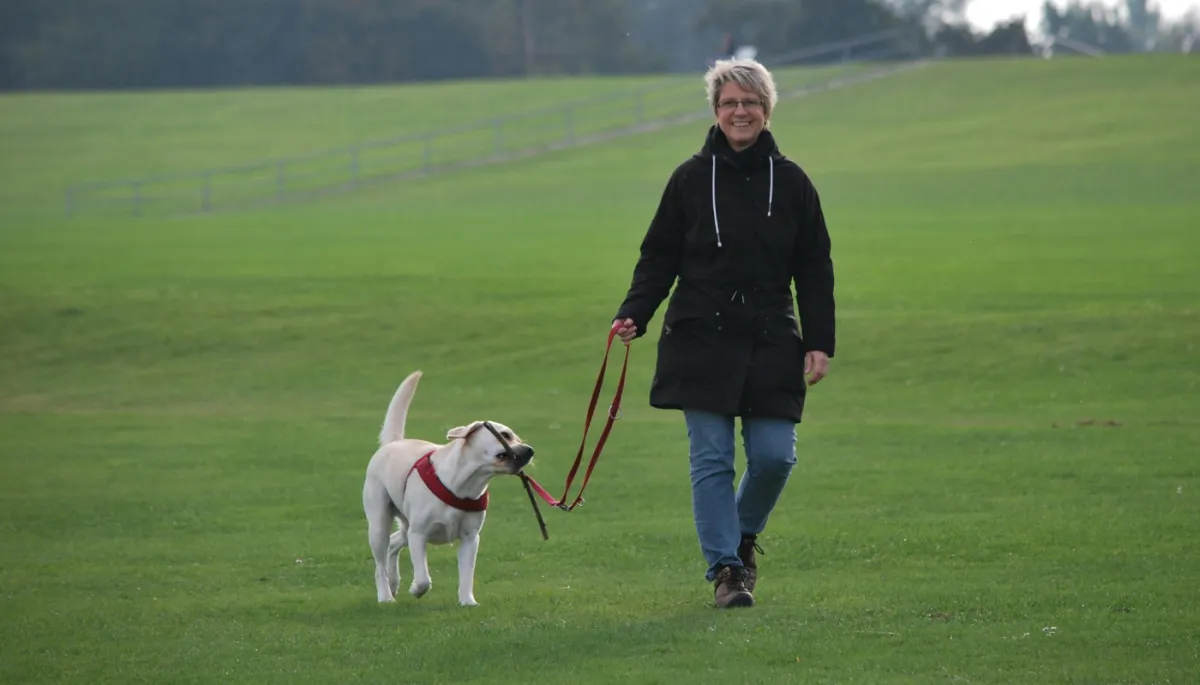
Now, the natural next question you might have is:
“Wow this sounds amazing! But how do I build up all those pillars? What do I do?”
This is my favorite part of the Resolving Reactivity system. Because most reactivity rehab programs will make this part very complicated.
They hand you a schedule. Ten-minute training sessions three times a day. Drills in the living room. Exercises at the park. Clickers, mats, target sticks, and so, so, so many treats.
Even for the small segment of reactive dogs who can benefit from this type of training, it takes a very, very long time. For the owner, it's basically a second job, and almost nobody sticks with it.
Our system works completely differently. Everything I just walked you through... all 7 pillars... they all get built through one daily outing.
We call it the Total Walk.
One walk a day. 20 to 60 minutes, depending on your dog's needs. All you need is just a leash and a collar. No treats, no toys, no gadgets.
One ‘Total Walk’ done right, builds every single pillar at the same time.
Fulfillment. Cooperation. Authority. Impulse control. Confidence. The Never Again No. And Freedom to Choose.
All of it in one outing with your dog, where 90% of the time is spent just enjoying the walk together. (yes, even if your dog is severely reactive)
And it's not rigid. It's not clinical. There's no protocol you have to memorize or perfect sequence you have to get right. It feels natural and easy.
At the end of it, your dog comes home satisfied. And you come home feeling like you actually enjoyed spending time with your best friend. Maybe for the first time in a long time.
Taking A Step Back To Recap
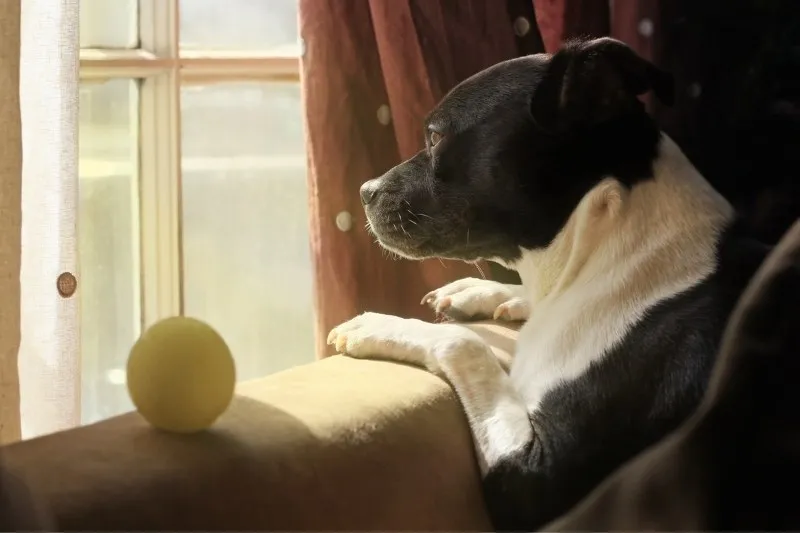
Let’s take a step back for a second and look at what you now know:
You know the 4 root causes behind almost every reactive dog — Frustration, Fear, Misplaced Genetics, and Unmet need for Fulfillment.
You know Habit is the hidden “half-cause” that keeps reactivity alive even after the root causes are solved.
You know the step-by-step 7-pillar system that resolves all 4 and a half root causes organically.
And you know that one Total Walk a day is the only thing you need to do to build all of it.
That is much, much further than most reactive dog owners ever get. And it's more than enough for you to start with and begin making real progress.
But knowing the system and executing the system are two very different things. Reading the system on a page is one thing. Standing on a sidewalk with your dog losing his mind at a passing dog is something else entirely.
Which is why now, you have to decide where you’ll go from here.
There Are 3 Paths Forward From Here
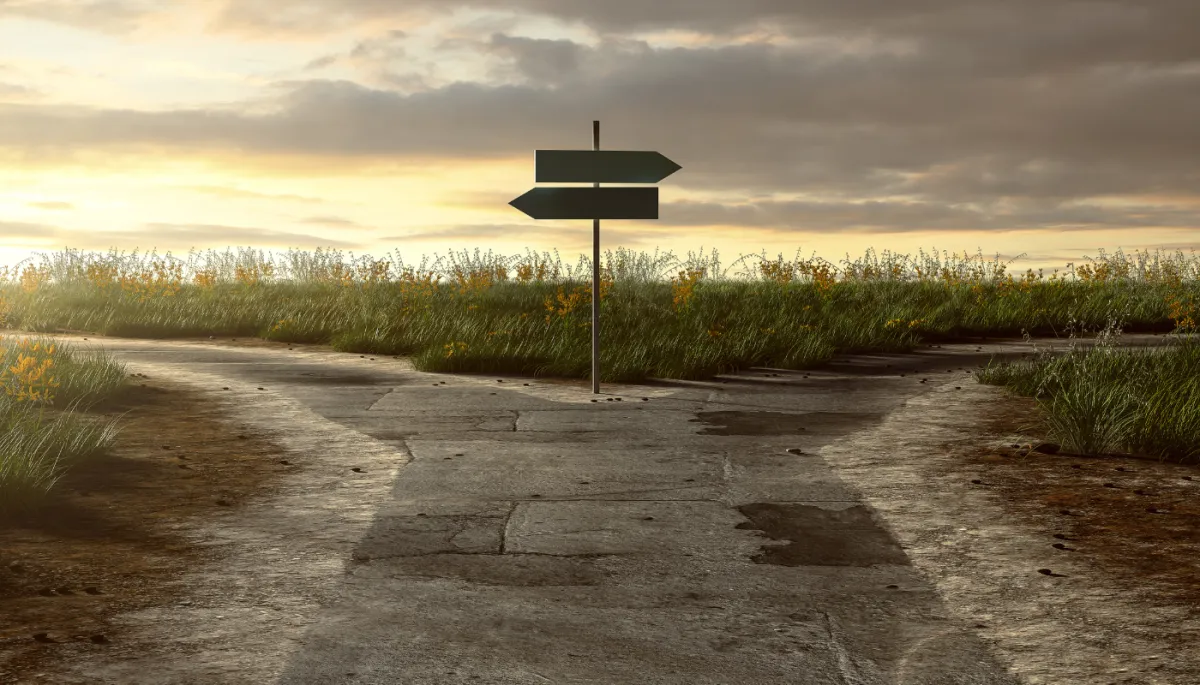
Path #1 is to do what most people do — nothing… Cope & Hope.
To keep living with the constant stress, the crushing guilt, and the heartbreak of knowing your dog isn’t living the life they deserve… hoping somehow things will magically get better on their own.
And maybe they will… but I think we both know, it probably won’t.
Path #2 is the DIY approach.
To take what you’ve learned from this page, and go apply it yourself with your dog.
It’s definitely possible. And after what you’ve learned on this page, you have a much better starting point than I did.
But let me tell you—without the right guidance, it’s a long, painful road filled with trial-and-error, dead ends, and lots of frustration.
Path #3 is the choice that gives you the best chance of actually resolving your dog’s reactivity once and for all.
This is the path that I wish I had, back when I was struggling for years with my dog Gibson.
Path #3 is to be walked through this full system step-by-step from someone who has truly mastered rehabilitating aggressive and reactive dogs. And no, that’s definitely not me.
That’s Matt Cochran.
Matt Cochran: Reactive Dog Rehabilitation Expert
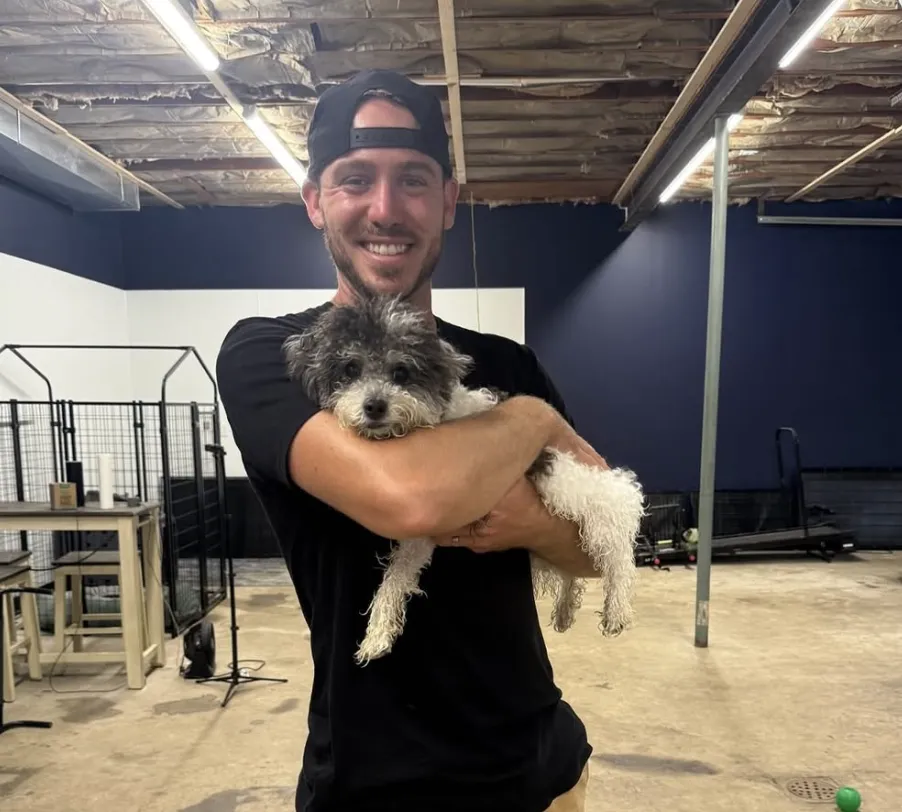
Matt is a certified professional dog trainer who owns Cochran K9 Training, near Pittsburgh, PA.
His Behavior Modification Board & Train program is 6 weeks, costs $5,000, and regularly has a waitlist.
He specializes in rehabilitating severely aggressive and reactive dogs… and the transformations he has transparently documented, start-to-finish, on-camera… are stunning.
Dogs that had been severely reactive and aggressive for years... completely transformed in weeks.
Not just managed. Not just "a little better." Fixed.
Dogs that were shutdown, fearful, ready to fight at the drop of a hat… off-leash playing with strange people and dogs.
It was beyond anything I ever thought was possible with reactive dogs. And it wasn't a one-off. I watched it happen over and over and over again.
So I reached out, and we decided to partner up here at Trail & Bone to help everyday dog owners get the same results with their dogs that Matt gets with his clients.
We spent over 6 months working together to take Matt’s process for achieving those transformations, and turn it into a step-by-step system to help everyday dog owners get the same results with their dogs that Matt gets with his clients.
And the result was...
Resolving Reactivity
Transform your best friend into the confident, well-behaved, & trustworthy dog you know they can be
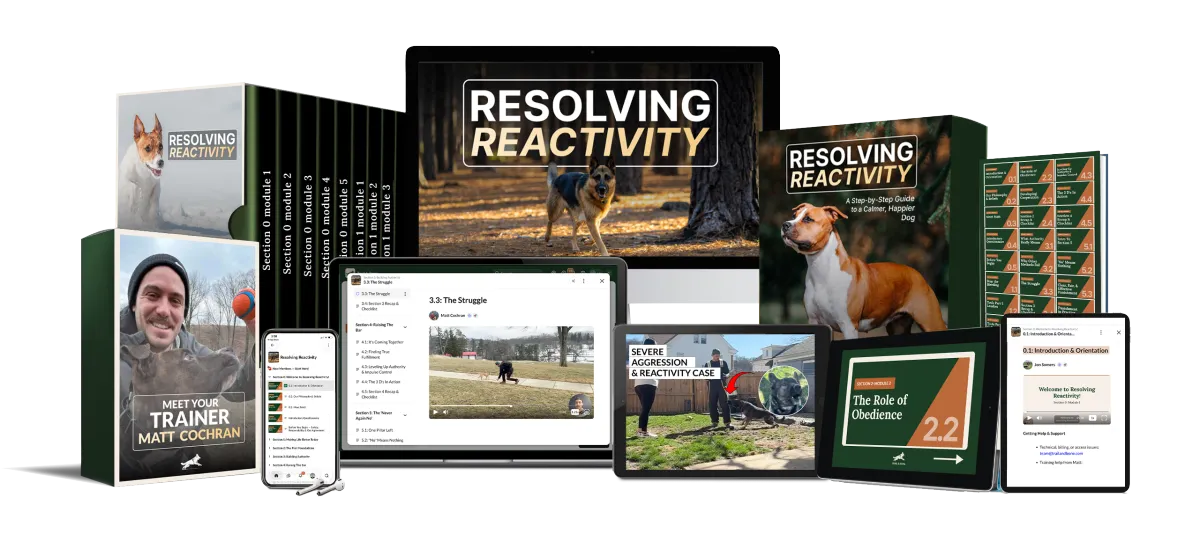
Resolving Reactivity is our complete online course for owners of reactive dogs.
Inside, Matt walks you through the whole 7-Pillar System, one step at a time, so you can end your dog’s reactivity for good… in as little as 6 weeks.
This is the same process behind each one of Matt’s transformations, and it’s designed for everyday dog owners, just like me.
You’ll learn what to do and how to do it.
You’ll see what it looks like with real, untrained reactive dogs.
You’ll know what to work on and when to move forward.
And by the end… you’ll have a calm, confident, well-behaved dog you can trust.
