
For owners of dogs who can't stop barking, lunging, or snapping...
How To 'Fix' Reactive or Aggressive Behavior From The Inside-Out... And Transform Your Best Friend Into The Calm, Confident, & Trustworthy Dog You Know They Can Be
Even if you've been told your dog is "too far gone"... or that "this is just who they are."
Watch the free workshop below to discover the step-by-step 'Inside-Out Approach' that heals aggressive and reactive dogs in as little as 6 weeks.
Presented By
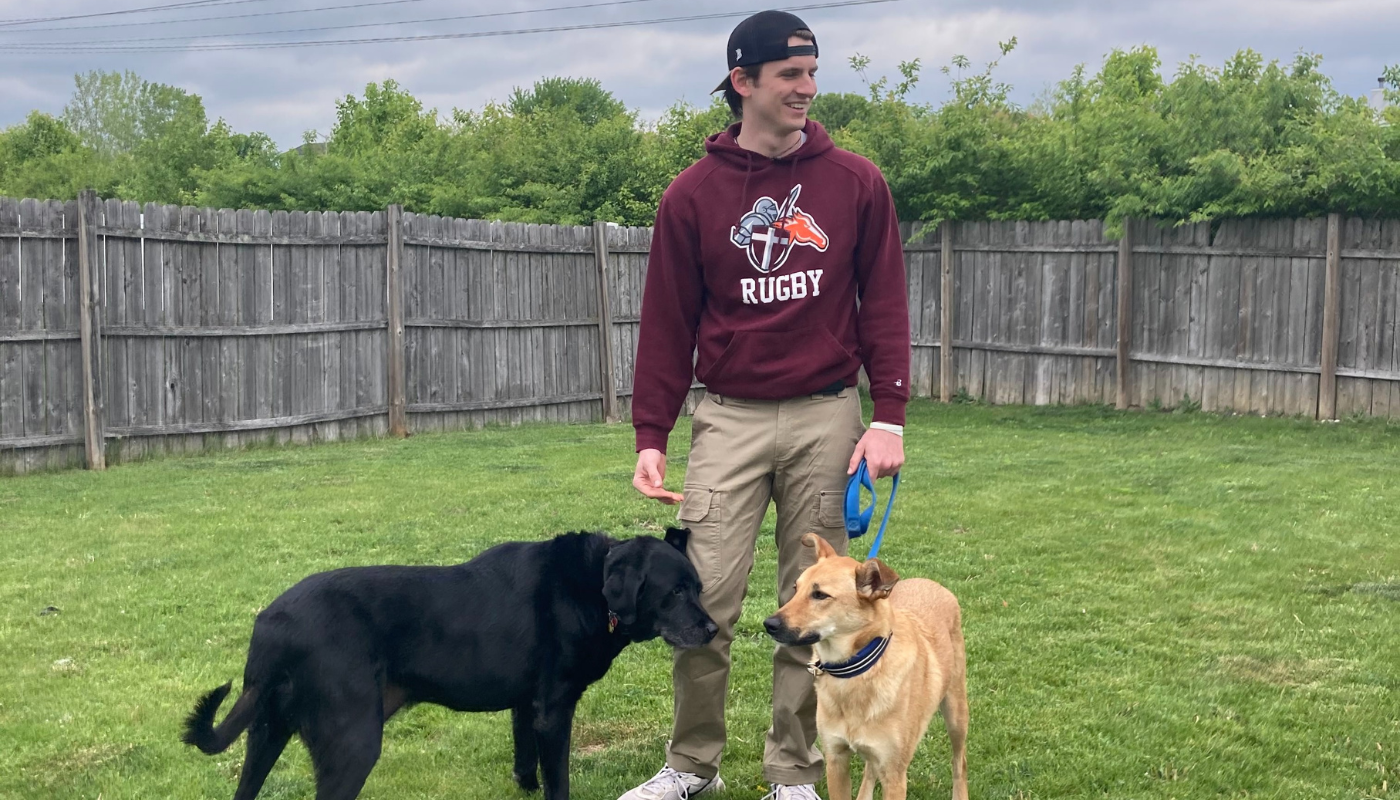
Jon Somers
Everyday Dog Owner.
Founder of Trail & Bone.
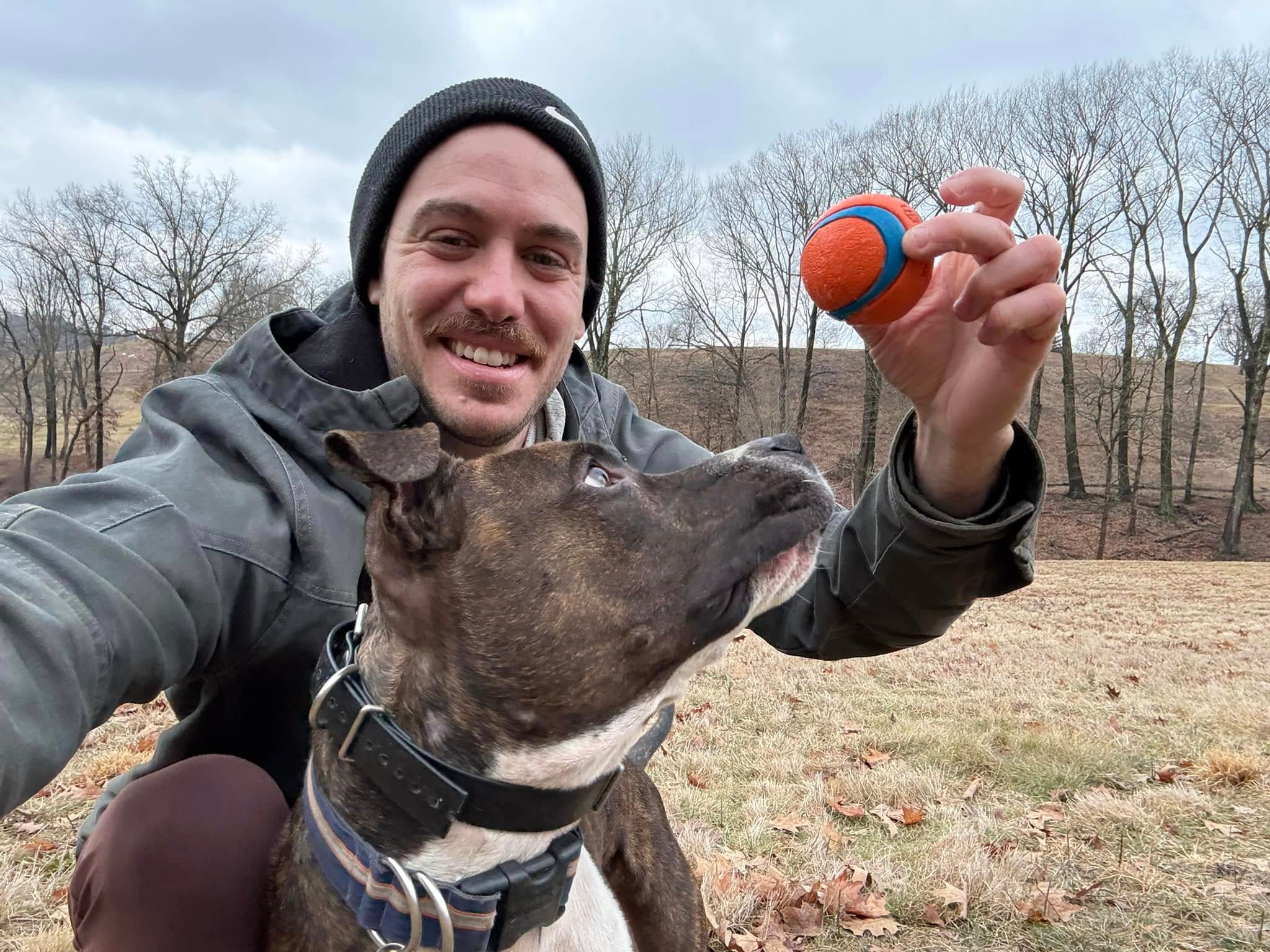
Matt Cochran
TWC-Certified Professional Dog Trainer.
Owner of Cochran K9 Training near Pittsburgh, PA.
Here's some of what you'll learn in this video workshop:
The "Inside-Out Approach" that stops barking, lunging, snapping, whining, and fence-fighting at the source... instead of just managing it forever.
What “Reactivity” really is... and no, it’s not a disease, diagnosis, or disorder
The 4 Root Causes of Reactivity... and how each of them start
Why so many professional trainers proudly admit their own dogs are still reactive... and how this explains why nothing you’ve tried has worked
The real reason your dog explodes at every passing trigger... and why it has nothing to do with the trigger itself
Why "fixing" the barking, lunging, and snapping directly always fails... and what actually works instead
The simple reason your dog ignores you the second a trigger appears... and how to use that to your advantage
Why "authority" became a dirty word in dog training... and the calm, fair version of it that actually makes your dog happier and more relaxed.
And much, much more…
Prefer to read? Keep scrolling ⬇️
Your dog isn’t broken.
They’re not a lost cause or beyond help.
And they’re not doomed to a life of fear, frustration, and isolation.
But I know it doesn't always feel that way.
Not after another walk filled with tension — neighbors avoiding you, giving you the side-eye…
Or after another chaotic visit from the mailman or delivery driver…
Or when your dog goes ballistic at every passerby through the fence, car, or window…
If you're living this reality with a dog, you love more than anything, but don't know how to help…
Then I need you to know: You are not alone.
And what you're about to learn on this page can change everything...
"Maybe you should just rehome him."
Jonathan Somers
Chicago, IL
Updated: June, 2026
I’ll never forget when one of my family members told me that.
You see, just a few hours prior, my best friend Gibson bit our family friend on the knee… and sent her to the hospital.
I was devastated. My worst nightmare had come true.
I was so ashamed of myself for allowing that to happen. Gibson was my dog, and he hurt someone we cared about.
And now my own family was telling me to give him away.
I felt like I failed him. And the truth is, I had.
But I couldn’t pretend to be surprised.
By that point, Gibson’s behavior had been spiraling for years.
— He’d go ballistic at strangers out the window
— Lunge at other dogs & people whenever I took him for walks
— And if anyone came over… he had to be locked in his crate
So I did what anyone would do.
I hired a professional trainer.
Then another...
Then another...
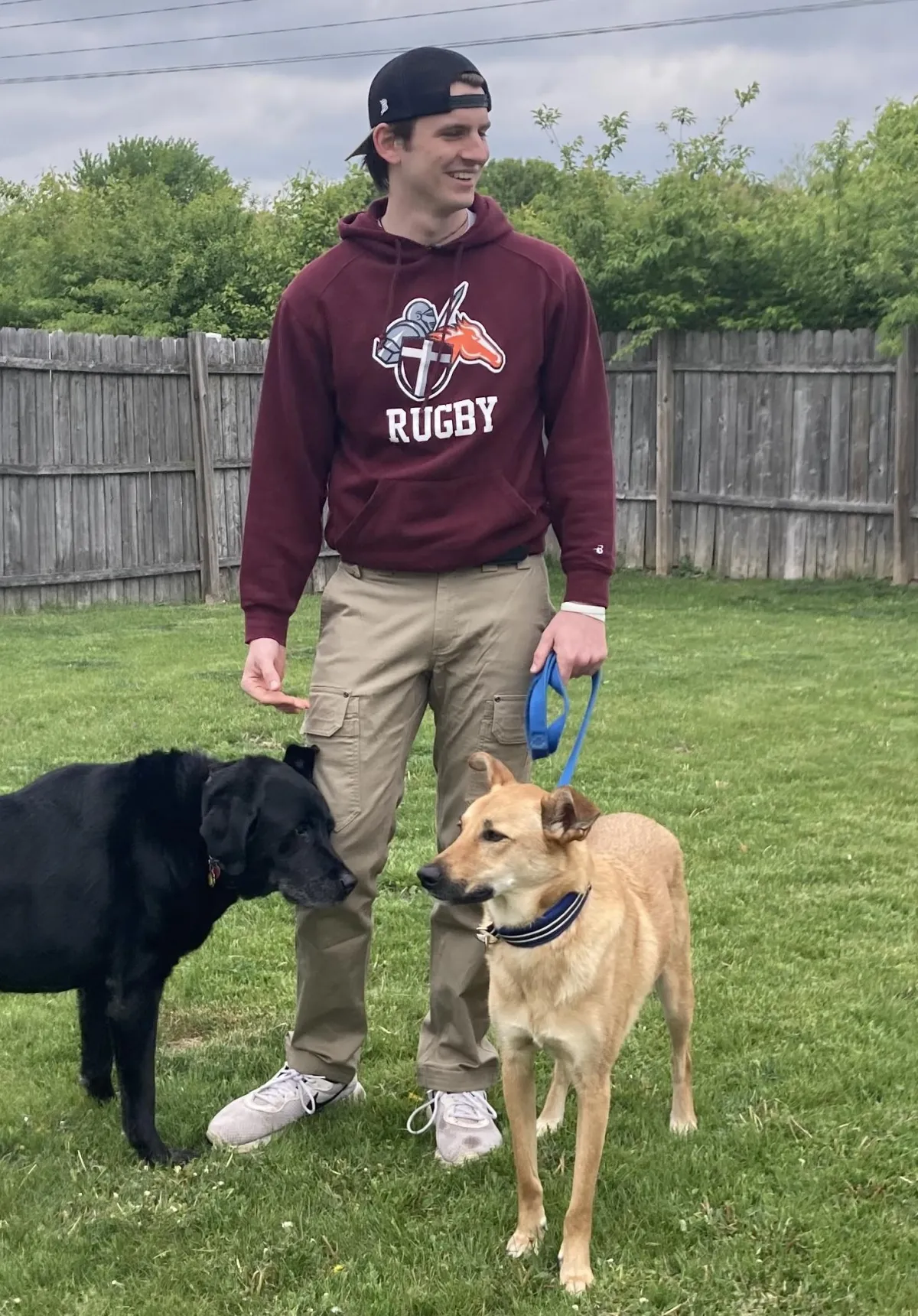
Three trainers. Years of energy. Nearly $4,000 spent.
And all I had to show for it was a dog who could sit, stay, and place beautifully in my backyard...
but still lost his mind the second he saw a person or dog he didn't know.
So after 4 years of frustration and misery, I decided to take it upon myself.
I was going to heal my best friend. I had to.
So I dove in. Books, blogs, videos, forums, courses… anything I could get my hands on.
And Gibson got better! We even moved to crowded downtown Chicago and were able to live mostly problem-free.
But he was far from "fixed."
He still freaked out at people walking too close. I still crated him for guests. I still kept my distance from other dogs as best as I could and turned down requests to have them meet.
But he was definitely better. And that felt like a miracle.
But that's exactly what kept us stuck for years...
I thought “Managed, but Better” was as good as it gets
Every expert I learned from said the same thing: A dog like Gibson will always be reactive.
If you work hard at it, consistently over months and years… you can see real improvement. But a reactive dog is a reactive dog.
I believed it.
And so I thought I had achieved success... I reached the top of what’s possible with a reactive dog.
That was back in 2021.
I never knew how wrong I was until the summer of 2025.
Because that was when I stumbled across a video from a professional trainer in a small town outside of Pittsburgh.
His name is Matt Cochran.
And what I saw in that video stopped me dead in my tracks.
It was of a dog that, by every standard I'd learned, should have been a lost cause...
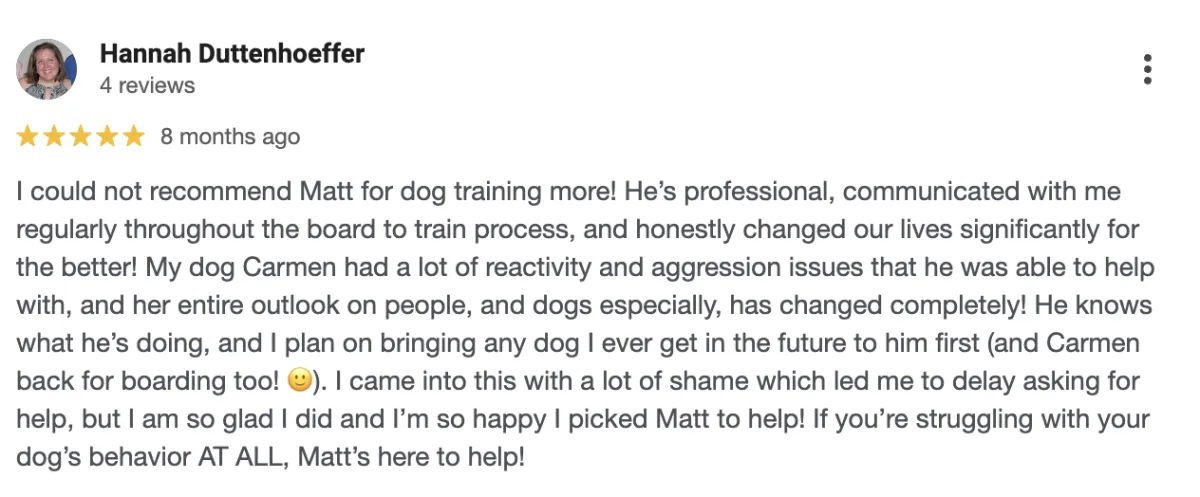
Her name is Carmen.
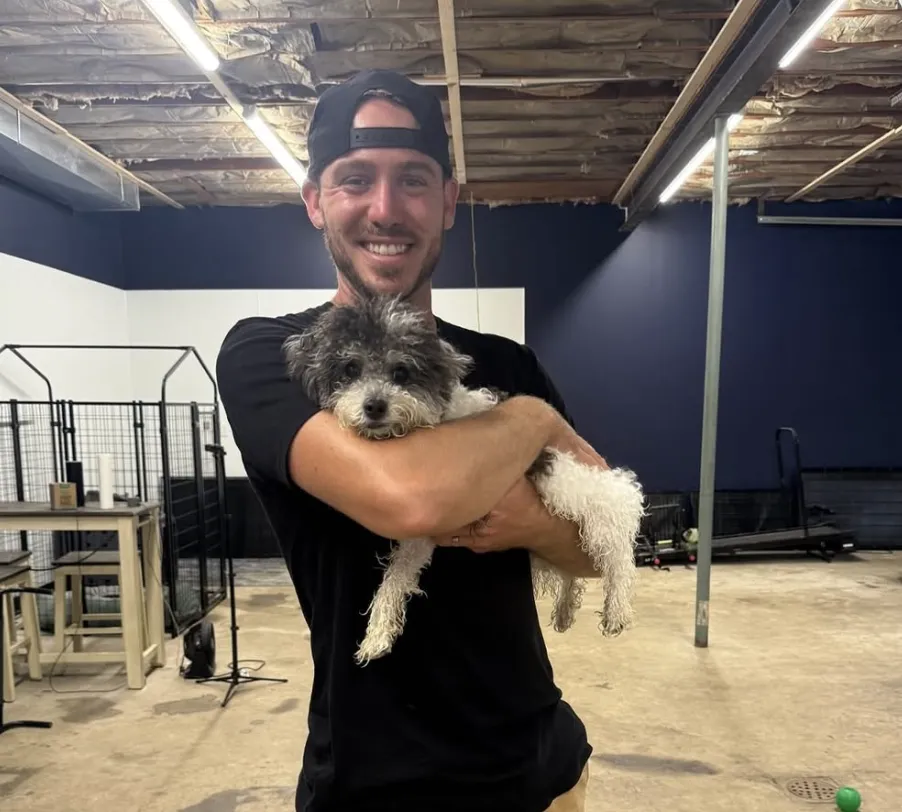
Carmen was severely aggressive and reactive. Had a bite history, had been through years of failed training.
The kind of dog that most trainers would tell you needs to be managed forever, at best. Some would even say put down.
And Matt had this dog and her owner calmly walking through a super crowded park, right next to people and dogs, like none of it had ever been a problem.
Then I saw another video of Carmen off-leash in an open space playing with a group of other dogs.
I couldn't believe it. I thought it had to be a fluke.
But I clicked on another video.
Then another one.
Then another.
And video after video, I watched Matt take on the worst of the worst.
Dogs that had bitten people.
Dogs whose owners were one bad day away from giving up.
Dogs that had been recommended by other trainers to euthanize…
And he completely transformed them. Not over months or years…. In weeks.
Not just "managed." Not just "a little better."
These were dogs that went from explosive and dangerous to confident, well-behaved, and trustworthy.
The kind of transformations I had spent years being told weren't possible, and telling others the same thing.
I immediately started using what I’d learned from Matt on Gibson.
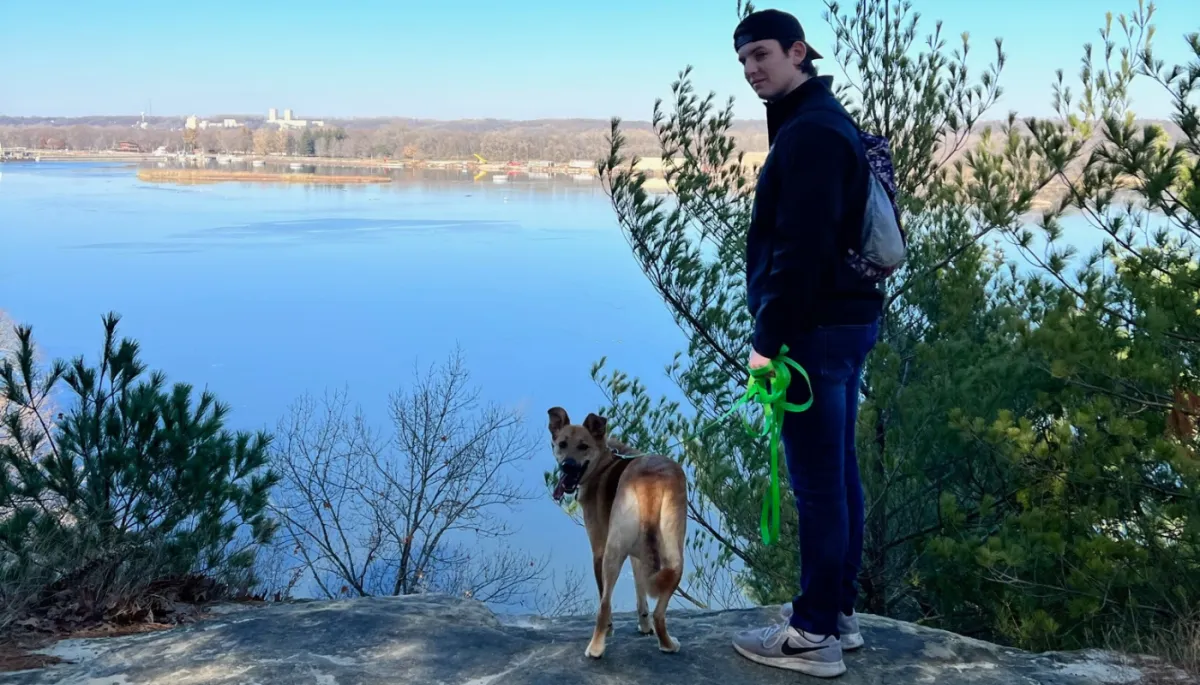
The difference was mind-blowing.
From the very first session, everything was completely different from anything I’d ever learned before.
And the improvement was obvious immediately.
Within a few weeks, he was a completely transformed dog.
And the best part was, I looked forward to our walks going forward. Where before, it was still a tense tug-of-war… Now it was easy, free and felt natural.
I was sold.
I knew after the first week of trying Matt’s methods for myself, that this was the future of dog training. And I was determined to be a part of it.
So I asked Matt to partner with me, and to help me spread the truth about not only what’s possible with reactive and aggressive dogs… but also how to achieve those life-changing results.
And I’m forever grateful that he said yes.
And over the next several months, I learned everything.
The philosophy.
The system.
The steps.
Everything that Matt does to consistently transform reactive and aggressive dogs... And now, you’re going to learn it too.
I'm going to walk you through it all.
👉 Why your dog is reactive in the first place.
👉 Why nothing you've tried has worked.
👉 And what actually does work, even with the most difficult cases, as well as the mild ones.
Let’s dive in!
Who this is for
Now, first thing’s first, I want to be totally clear on who this is for. Throughout this video I've used "reactive" and "aggressive" interchangeably, because that's how most people use them. But they aren’t the same thing, and for this, the difference matters.
For us, the word “reactivity” covers a wide range of behaviors:
— Barking, lunging, growling…
— Hyper-fixating or over-arousal
— Fence fighting.
— Hyper-vigiliance, meaning always on-edge and scanning the environment
— Snapping at people or dogs who get too close too fast
All of that falls under this umbrella of “reactivity.”
True aggression is something much specific and more serious.
To us, aggression is when a dog would, completely unprovoked... attack a person or another dog with the intent to bite and cause real harm. A dog whose first move at the sight of a trigger isn't to bark or lunge or even snap, it's to attack with intent.
If your dog is truly aggressive, then fair warning: a lot of what you’ll learn here will be very helpful, but it’s not going to be enough. This is focused on reactivity.
Why Nothing Else Worked
Most of the training methods out there for reactivity fall into one of two camps.
And at this point, I've heard from hundreds of people that these methods failed.
Ineffective Method #1: Punish First, Ask Questions Later
With this method, the trainer takes your reactive dog, throws them straight into an overwhelming situation, and hammers them with brute force from day one.
No foundation.
No relationship.
No preparation.
Just pressure and pain.
This goes one of two ways:
Sometimes the dog stops reacting... but only with that trainer. The moment you take the leash back, it all comes back. Because nothing actually changed in your dog.
The other way is worse.
The dog gets pushed too far, blows up harder than ever, or even redirects at you or the trainer. And that’s when you’re told your dog is a lost cause.
“Punish First, Ask Questions Later” is cruel, it's sloppy, and always makes things worse.
Ineffective Method #2: The Textbook Trap
This second method is the opposite. And it hits close to home for me, because before I discovered Matt, it's what we taught at Trail & Bone for 4 years.
I call it “The Textbook Trap,” because these are methods that sound great on the whiteboard, but don’t actually work in real life.
You’re told to make your dog sit and look at you when triggers approach, and stuff them with treats. And then always keep your dog “under threshold” and slowly work your way closer and closer to the trigger, giving treats the whole time
The idea is that eventually your dog will learn to associate their triggers with the treats, and will look for a treat instead of reacting
But to make any sort of progress that sticks, you have to do dozens, if not hundreds of repetitions in controlled environments, with trigger helpers, consistently for months if not years. Almost no one has the time or resources to do that.
Progress is painfully slow and very fragile. One bad experience can undo months of effort.
But what really broke my confidence in this approach is that even in the rare cases where people do follow through perfectly... it's often still not enough. Which is why so many of the trainers who teach these methods to others still have reactive dogs themselves, and often wear it like a badge of honor.
I’m not saying these are bad people. I was one of them for years before I met Matt! And I’m also not saying these methods can’t do any good at all. Gibson was improved by all my time and effort using these methods… but he was still far from perfect and needed to be strictly managed.
And that’s usually the best case scenario for dogs trained using “The Textbook Trap.”
See, where both of these approaches fail is in the same place.
They try to suppress, distract, redirect, replace, or just avoid the outward behavior — the barking, lunging, snapping… But they don't do any work on what's actually happening on the inside of the dog.
Reactivity is a symptom. It's not the disease.
A reactive dog isn't choosing to react. They're being driven to. There's something boiling up inside of them, an energy they can't control. And the only way for that built-up pressure to be released is through the reactive behavior.
But when you address what's happening on the inside first... and fix the source of that pressure... the pressure itself goes away. And when there's no pressure underneath, the urge to react isn't there anymore.
So one of two things happens:
1) Either the reactive behavior fades on its own, because there's nothing left fueling it…
2) Or it becomes much weaker and less committed. And very easy to stop for good.
This is the 'Inside-Out Approach'
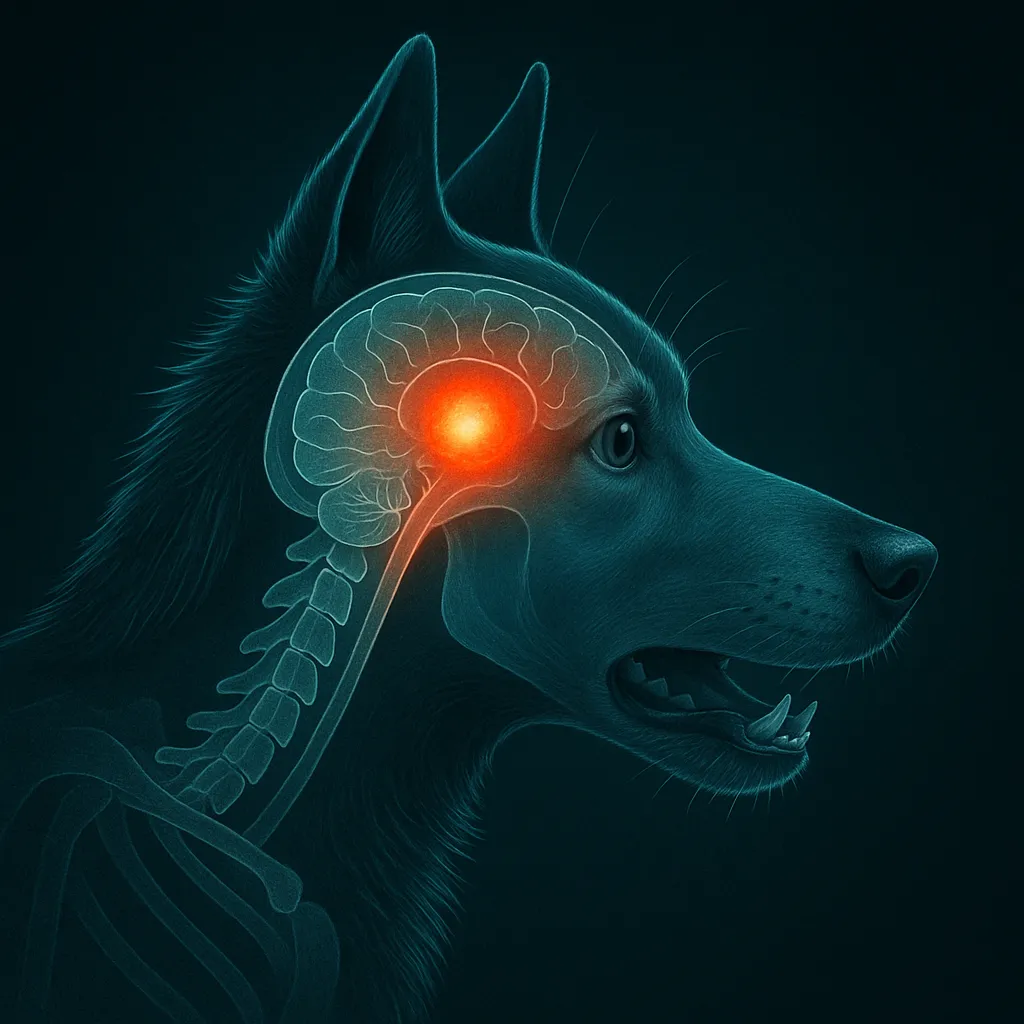
And it works because that pressure underneath, no matter how chaotic or intense it looks on the outside, always traces back to one of four root causes.
Solve the four roots, and your dog changes inside. Once the inside changes, the outside follows.
Which then, turns into:
🐾 Relaxed, pleasant walks,
🐾 Peace in your home,
🐾 And a feeling of calm and normalcy again.
Let's go through each root cause one-by-one.
The 4 Roots of Reactivity
Root Cause #1: Frustration
This usually starts when your dog wants something, and they’re blocked from getting it.
They want to sniff that bush, but the leash won't let them.
They want to chase that squirrel, but the fence is in the way.
They want to check out or maybe greet that strange person or dog, but you pull them back.
Frustration can simmer and simmer until seemingly out of nowhere, it boils over.
On a walk it’s Tug. Pull. Block. Redirect. Tug. Pull. Block. And by the time another dog appears around the corner, your dog is exploding from just a few minutes of built-up frustration.
Root Cause #2: Fear
Real fear-based reactivity is when your dog genuinely believes the trigger is a threat to them, to you, to the home... And when any animal feels threatened, they have two choices: Fight or flight.
A dog on a leash doesn't have the option to run away, because they’re restrained by the leash. So they’re left with one choice: fight.
They bark, lunge, snap, snarl, anything to make the threat go away.
Root Cause #3: Misplaced Genetics
Certain breeds were bred over decades or centuries to guard, herd, chase, and protect. And those instincts don't disappear just because your dog lives in a safe suburb instead of a 1800’s farm!
Their genetics are just expressing themselves in ways that don't work for modern life.
Dogs with reactivity caused by genetics like this, are very, very commonly labeled as “unfixable” by the vast majority of trainers. But it’s not true whatsoever.
Root Cause #4: Unmet Need for Fulfillment
Some dogs are just... bored. Chronically understimulated. They don't get enough mental exercise, enough physical activity, or enough outlets or opportunities to be free to be a dog.
So when they finally do encounter something stimulating, whether positive or negative… like another dog, a delivery driver, a squirrel… they explode.
And going crazy actually becomes the highlight of their day. It’s a release valve for all the pent-up energy that has nowhere else to go.
Most reactive dogs don't have just one of these as the root cause. They have two, three, sometimes all four going at once.
Your dog might have guarding or herding genetics... On top of not getting enough physical or mental activity day-to-day... Combined with frustration from being held back by leashes, windows, and fences. And maybe even some fear on top, from the time an off-leash dog rushed at them.
Every reactive dog is a unique mix.
But don't worry about having to perfectly diagnose your dog's root causes. Because the step-by-step system Matt developed solves all four root causes at the same time, without you having to think about it at all.
It’s a 2-part system. Part 1 is to Build the Foundation.
This is where we transform your dog on the inside.
It’s made up of 5 pillars. Let’s go through each one
The 5 Foundational Pillars of
Reactivity Rehabilitation
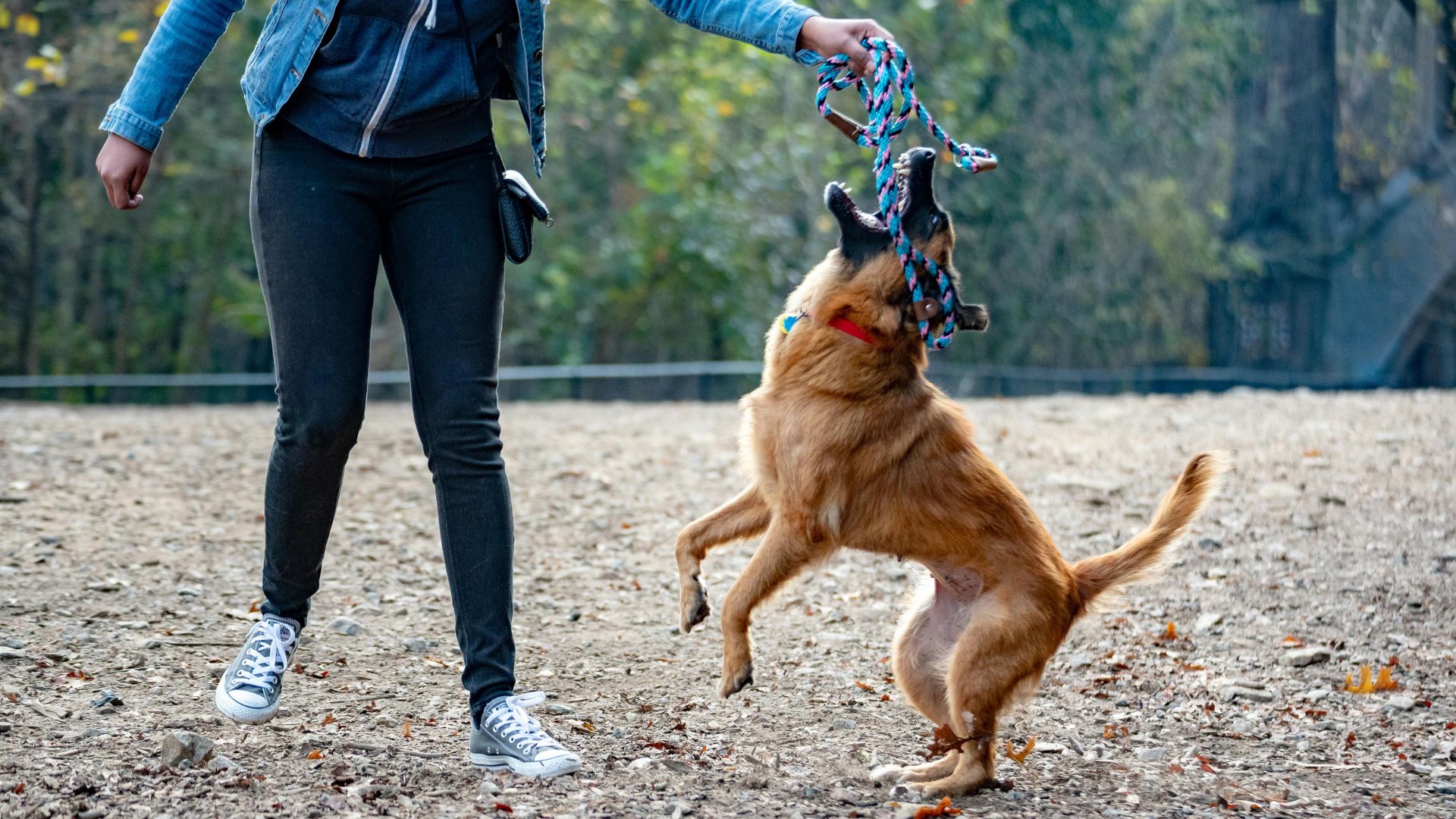
Pillar #1: Fulfillment First
It’s so important that we always remember, dogs are animals.
And they do occasionally need some new and exciting stimulation that burns off their energy and meets their biological needs.
A fulfilled dog’s default state becomes content.
And a content dog doesn't feel compelled to explode at every passing trigger.
Pillar #2: Same Team, Same Goal
Most people never realize it, but it’s likely your dog currently sees you as an obstacle to getting the things they want.
Every outing is a constant tug-of-war. They want to go one way, you're pulling them the other.
When you fix this, any frustration melts away, and your dog sees you as the source of all the best things in life.
And that relieves an anchor of tension from your relationship that you probably didn’t even know was there!
Pillar #3: "Because I Said So"
Who decides whether or not your dog can lunge at a moving car… you or your dog? What about eating chicken wings off the sidewalk?
You, of course.
Because those things are extremely dangerous for your dog. But they don’t understand that.
So you make that decision for them, for their own good.
This is why “because I said so” is so important.
They may not understand, but they have to do what you say, because you know best.
That’s authority. And authority is not a dirty word.
I know it makes some people uncomfortable, but I’m not talking about dominance theory or being "the alpha" or anything like that.
I’m talking about trustworthy, reliable authority… and that’s a responsibility we owe to our dogs.
And here's what surprises most people: when your dog embraces your authority, they actually become happier. Visibly lighter and more relaxed.
Because the burden of making decisions in a world they don't understand gets lifted off their shoulders.
Pillar #4: Good-Enough Impulse Control
With reactive dogs, there's zero gap between impulse and action.
Trigger appears → dog explodes.
No pause. No thought. Just an instant instinct reaction.
Building even a moderate amount of impulse control creates that gap for your dog to be able to pause for half-a-heartbeat and think about what they’re going to do, before they do it.
Pillar #5: A 2-way Street of Confidence
This means 4 kinds of confidence, all at once:
1) Your dog’s confidence in themselves
2) Your confidence in yourself, as a dog handler
3) Your dog’s confidence in you, as their leader
4) And your confidence in your dog, to make better decisions
Energy flows through the leash. If you're tense and anxious, that energy flows right down the leash to your dog.
And it works the other way too. If your dog is stressed, you feel it travel right back up to you. That's how you end up in a vicious cycle of negative energy bouncing back and forth, making everything worse.
But once you build this 2-way street of confidence and trust, the cycle flips. Now it's calm feeding calm. Confidence feeding confidence.
And this will melt away any anxiety, stress, and frustration.
“Wow this sounds great! It makes perfect sense. But… it sounds like a lot of work. How do I actually do all this?”
Speaking for myself, this is by far the best part of Matt’s system… Because when it comes to actually building this foundation with your dog, Matt's method couldn't be simpler, or more enjoyable to actually do every day.
Most reactivity rehab programs will make this part very complicated.
They hand you a schedule.
Ten-minute training sessions three times a day.
Drills in a different environment every day
Controlled setups with family and friends as much as possible
Clickers, pouches, muzzles, and so, so many treats.
For the owner, it's basically a second job, and almost nobody sticks with it.
Matt’s system is completely different.
Everything I just walked you through... all 5 pillars... they all get built through one daily outing, where 90% of the time is spent just enjoying the walk together.
It's called the “Total Walk.”
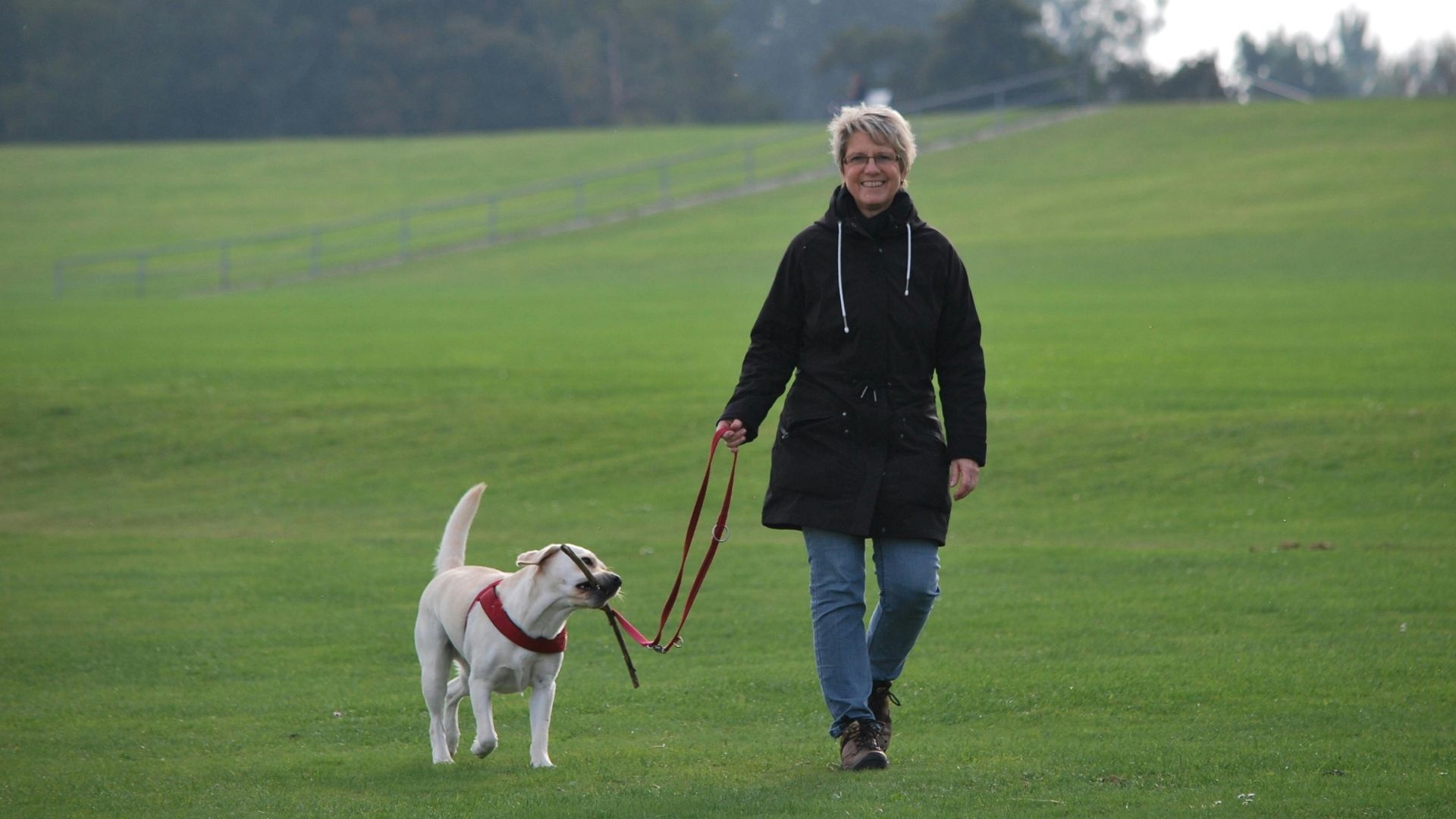
One walk. 20 to 60 minutes, depending on your dog's needs. And all you need is just a leash and a collar. That’s it.
No overflowing bag of treats, tools, toys, and gadgets.
Whether you live in a city or a quiet suburb, whether your dog is mildly reactive or severely so, The Total Walk adapts to your situation.
And one ‘Total Walk’ done right, builds every foundational pillar at the same time.
Fulfillment.
Cooperation.
Authority.
Impulse control.
Confidence.
And it's not rigid. It's not clinical. There's no protocol you have to memorize, or perfect sequence you have to get right.
Instead, it feels natural and easy. Like the way you always imagined life with your dog would be, before reactivity took over.
And at the end, your dog comes home genuinely satisfied. Not just physically tired, but also mentally content.
And you come home feeling like you actually enjoyed spending time with your best friend. Maybe for the first time in a long time.
After just a couple weeks of Total Walks, so much will have changed already:
Your dog’s default state becomes calmer, more content. Instead of on-alert looking for the next thing to set them off.
If you give your dog a command, they don’t blow you off. They may not be perfect, but miles better.
Walks become pleasant and refreshing. All the tension and frustration is gone.
And you're no longer bracing yourself for chaos every time you leave the house.
Now for some reactive dogs, these Total Walks really are all it takes.
Once they’re built, the reactivity fades away. Because now that the pressure inside is gone… the compulsion to react is too.
This happens more often than you'd think. It’s not rare at all.
But… it doesn’t happen for every dog.
Which probably has you wondering... “If all the real reasons my dog was reacting are gone, why would they still react?”
Because there’s 1 more cause of reactivity. But it’s not a root cause, more of a “half-cause,” And it shows up after the 4 root causes have been solved.
What is it?
It's Habit.
Your dog has practiced reacting so many times that the behavior has become automatic. It is hardwired into their brain. The moment they see a trigger, they explode. They don’t think twice… it’s just muscle memory.
To break this habit, we have to step in.
Sadly, you can’t just sit your dog down and have a heart-to-heart.
You can't say: “Hey buddy, your life is better now. All that frustration, fear, and overstimulation is gone. You don’t have to do this anymore.”
I wish that would work. The world would be a better place if it did.
But unfortunately, it (probably) won’t.
Unlike humans, dogs don’t use logic. They can't think about the future and decide what’s in their best interest long-term. They live entirely in the now
If we don't step in and make the decision for them, they will never stop.
Because the reaction has become self-reinforcing. It’s like an itch that feels good to scratch. And every time they scratch that itch, it becomes more likely that they’ll scratch it again next time.
So we have to step in for our dogs and make the decision for them:
That this behavior is no longer an acceptable option.
They are not allowed to do it anymore.
And at this point in the process, they are ready to get this message.
So that’s when the last 2 pillars come in:
Part 2: Facing the Trigger
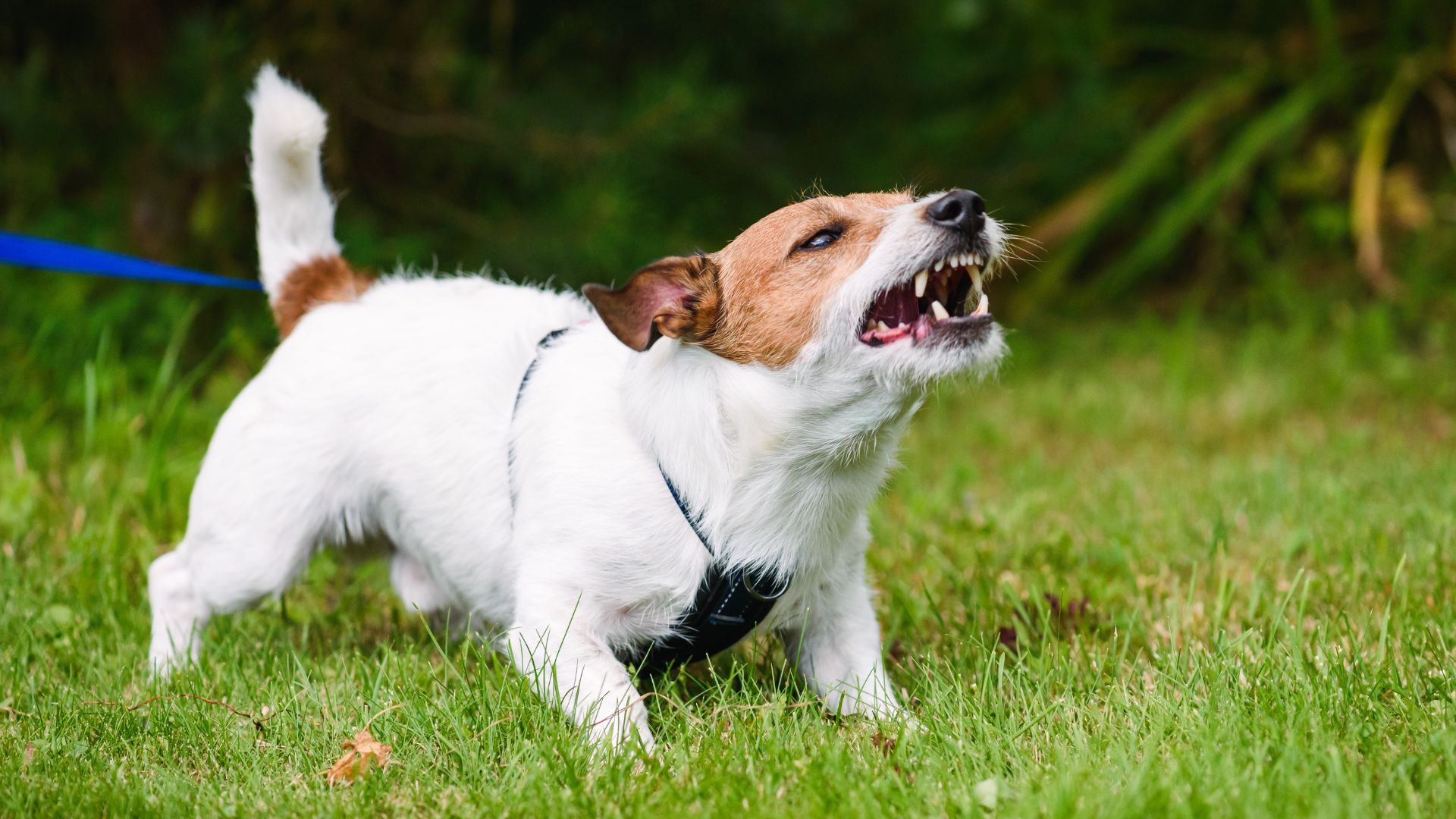
Pillar #6: The 'Never Again No'
Imagine you’re a parent, and your child bolts into a busy street. What do you do?
You move. You scoop them up. You get them out of the road. And then, with all the seriousness you've got in you, you make it absolutely clear:
"You can never, ever do that again."
This is the ‘Never Again No”
It is a correction where you make it absolutely clear to your dog that the choice they just made is not acceptable. They cannot do that.
And I want to be very clear about this: it is not about force or pain.
It is a clear and fair correction that communicates to your dog, in a way they understand, that this is a boundary they cannot cross. In fact, in the vast majority of cases, it's incredibly effective with just your voice because of how you train it in low-stakes situations first, and build up its power bit by bit.
But what makes it the "Never Again No" is your sincerity. You have to genuinely mean it.
Dogs are extremely sensitive to the emotions of those closest to them. They're pack animals. And for a pack animal, the worst possible thing is being shut out from the pack. So when you communicate disapproval to your dog with real sincerity, it lands hard.
This is what's called social pressure. And it's the key to why the ‘Never Again No’ works so well. You're communicating to your dog with your emotions that they can never do that again.
And once they understand that… Then comes the final piece.
Pillar #7: Freedom to Choose
If you never get behind the wheel, you’ll never learn how to drive. If we swaddle our dogs and hide them away forever, they will never learn how not to be reactive.
So, we need to allow our dogs the opportunity to face their trigger… and choose how to respond.
Now we don’t do this recklessly. We do it safely and make sure no one is ever at risk. That’s important. But with the foundation you've built, a lot of dogs will shock you here.
They'll notice the trigger, maybe tense up, stare, and then... just move on. And every time they make that correct choice and sniff or just look and move on… that new behavior gets stronger and stronger.
But sometimes they won't choose correctly, and they'll react. And that's okay. Because now we have the Never Again No to communicate to them that the bark, the lunge, the snap... is not allowed anymore.
And because of the authority and trust you've already built, they get it.
Maybe not the very first time. But within a few corrections, they understand: "Oh. I'm not allowed to do that."
Now, they'll be a little confused at first. They've been reacting for so long, they don't know what they're supposed to do instead.
So they look to you for guidance. And you don't swaddle them. You don't micromanage. You just encourage them, let them know they're doing okay, keep going.
And then something really beautiful happens... They figure it out on their own.
"Oh, I can just sniff around."
"Oh, I can just look the other way."
"Oh, I can just... ignore them."
And that's the breakthrough. That's the moment your world together totally opens up. Your dog’s reactivity will be over. Maybe you could even say “fixed”.
And believe me, it will feel amazing. And it will be a feeling you absolutely earned!
That is the entire process for resolving your dog’s reactivity, once and for all.
→ The 4 root causes.
→ The 5 foundational pillars to solve them.
→ The Total Walk to build them.
→ The Never Again No to break the habit.
→ Freedom to Choose to bring it all home.
You now know more about resolving reactivity than 99% of dog owners ever will. And honestly, more than most professional trainers too.
So now, it’s time to choose your path.
Because from here, there are three options:
Path #1: Do what most people do —nothing. Cope & Hope.

Keep turning around when you see another dog on a walk.
Keep pretending you don’t see the eye rolls and side-eyes from your neighbors.
Keep skipping the parks, closing the blinds, checking if anyone's outside before you let your dog into the yard.
Keep crating them when company comes over.
Keep dreading every walk, every visitor, every door knock.
And just hope that one day, somehow, things will magically turn around on their own.
And maybe they will… but I think we both know they probably won't.
Path #2: DIY. Do what I did 6 years ago — take it upon yourself and apply everything you've learned in this video to your own dog.
And honestly, if this is what you decide, we'll be thrilled. The whole reason we made this training workshop and gave away the entire system in it… is because reactivity is an epidemic. It’s everywhere. And it’s only getting worse year after year.
So by freely sharing the truth of why so many dogs are reactive… And how to actually fix that reactivity… We are hoping to start to turn the tide on how to approach reactivity, which will help far more people and dogs than Matt and I ever could.
So if you take this and run with it and you and your dog get there together, that's a win for everyone.
But as I’m sure you can imagine, there are so many nuances and details to the system,
and if we tried to make a video explaining it all, we’d be here for hours.
So even though you’ve learned so much… The truth is that if you do decide to go it alone, chances are it’ll still be a journey of ups and downs and trial and error… that leads to a dead end.
Which is why, with your permission, I’d like to tell you about Path #3…
The path I wish I’d had back when I was struggling with Gibson…
Because it’s the fastest, simplest, most surefire way to give your dog the life they deserve.
Path #3: Learn the full step-by-step system directly from Matt himself.
Path #3 is to have someone who has truly mastered reactivity rehabilitation… walk you through the entire process, start to finish, and show you exactly how it works, and how to do it with your own dog.
So that you don't have to figure out anything alone.
So that you don't waste another year, another paycheck, or another ounce of hope on something that will let you down.
So that this is the last time you ever have to think about your dog's reactivity.
That’s why Matt and I partnered together.
Not just to help you fix your dog's reactivity… But to give you and your dog the life you've always dreamed of together.
A life without constant stress and anxiety.
A life of peaceful walks, easy greetings, and outings together without shame or worry.
A life filled with confidence, trust, and joy.
That’s what we want for you.
And that's why we created...
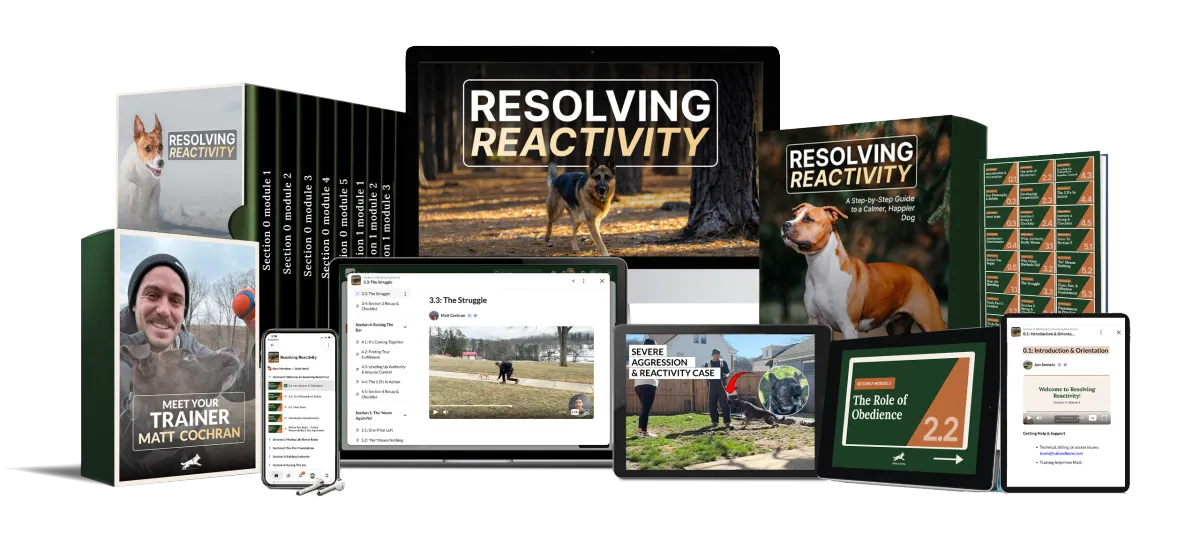
Resolving Reactivity
The step-by-step online course that teaches any everyday dog owner how to resolve your dog's reactivity in as little as 6 weeks.
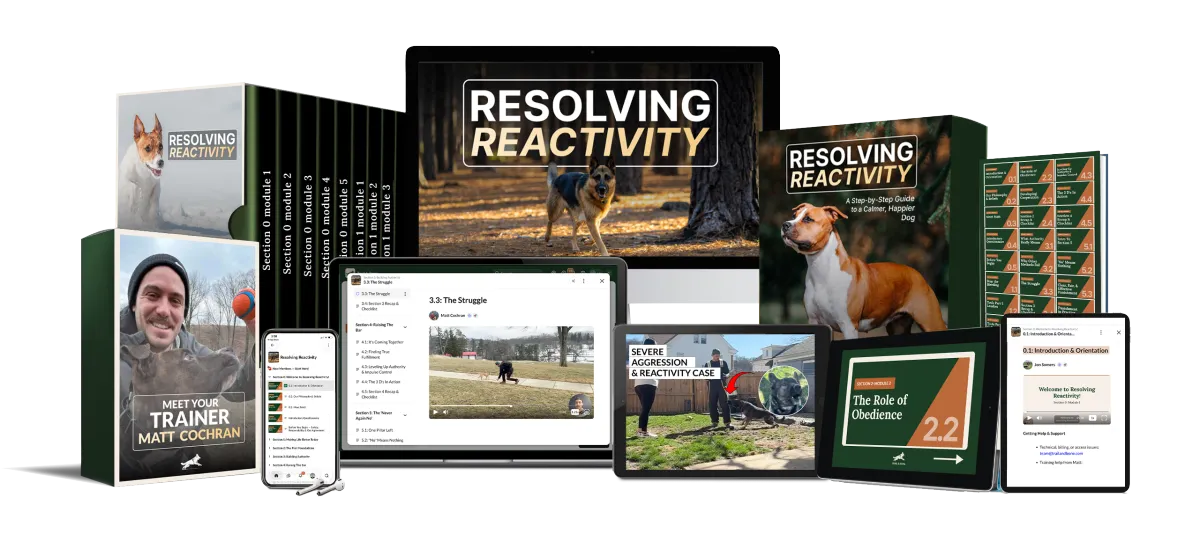
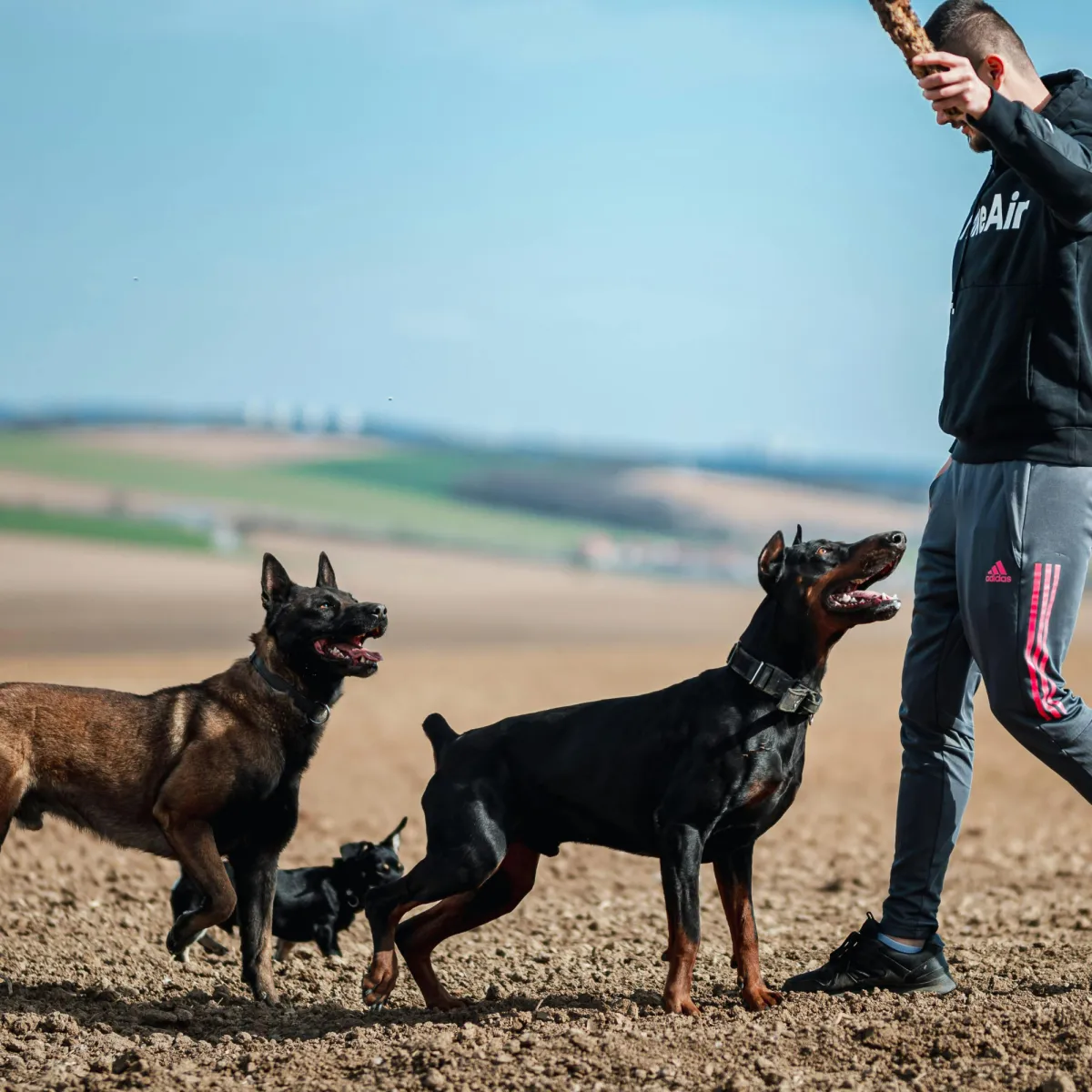
The course is broken down into 7 sections of video lessons. Every step is demonstrated on-camera with real, untrained reactive dogs, so you see exactly how to do it.
You don't need prior training experience or any special tools. And it works whether you have one dog or several.
Once you enroll, you have it for life. Watch from your phone, your laptop, whatever's easiest.
Who Resolving Reactivity Is For
This program is built for everyday owners struggling with their dogs' reactivity.
That includes:
✔️ Barking, lunging, or pulling toward other dogs, strangers, or other animals
✔️ Reactivity or chasing cars, bikes, skateboards, trains, or other moving objects
✔️ Fence fighting
✔️ Excessive barking out windows, from the car, from the crate, or behind barriers
✔️ Whining, over-arousal, or hyper-fixation anytime a trigger appears
If any of that sounds like your dog, this course was built for you. It doesn't matter how long the reactivity has been going on, how many things you've tried, or how much (or little) training experience you have.
This program is built for everyday owners struggling with their dogs' reactivity.
That includes:
✔️ Barking, lunging, or pulling toward other dogs, strangers, or other animals
✔️ Reactivity or chasing cars, bikes, skateboards, trains, or other moving objects
✔️ Fence fighting
✔️ Excessive barking out windows, from the car, from the crate, or behind barriers
✔️ Whining, over-arousal, or hyper-fixation anytime a trigger appears
If any of that sounds like your dog, this course was built for you. It doesn't matter how long the reactivity has been going on, how many things you've tried, or how much (or little) training experience you have.
IMPORTANT: Resolving Reactivity is specifically focused on reactivity. It does not address aggression, which we define as biting with the intent to cause harm.
If your dog's sole issue is true aggression, then the foundational work in this program (fulfillment, cooperation, authority, impulse control, confidence) will still help a lot. But we won't be teaching how to fix biting with intent to cause harm. It is beyond the scope of this course.
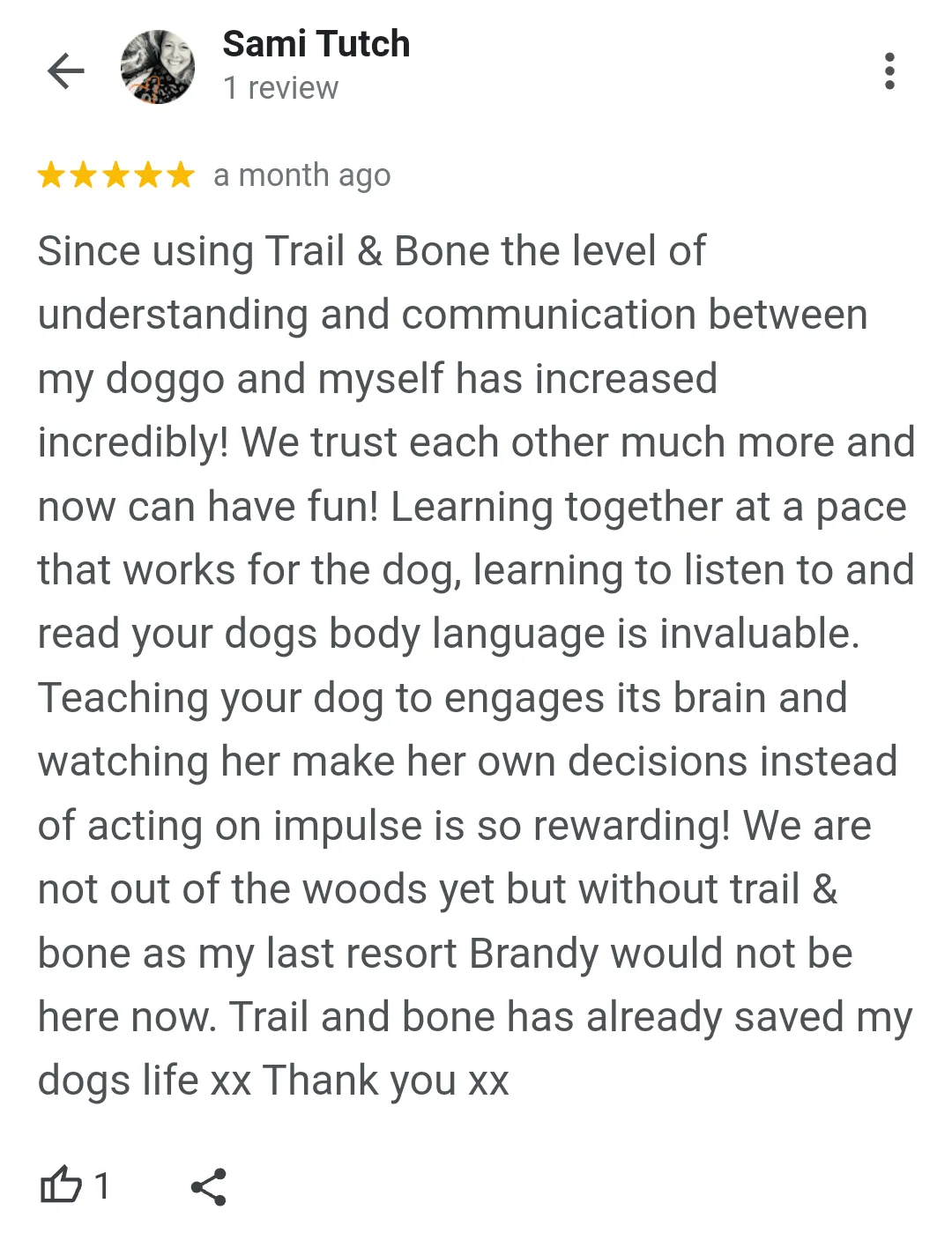

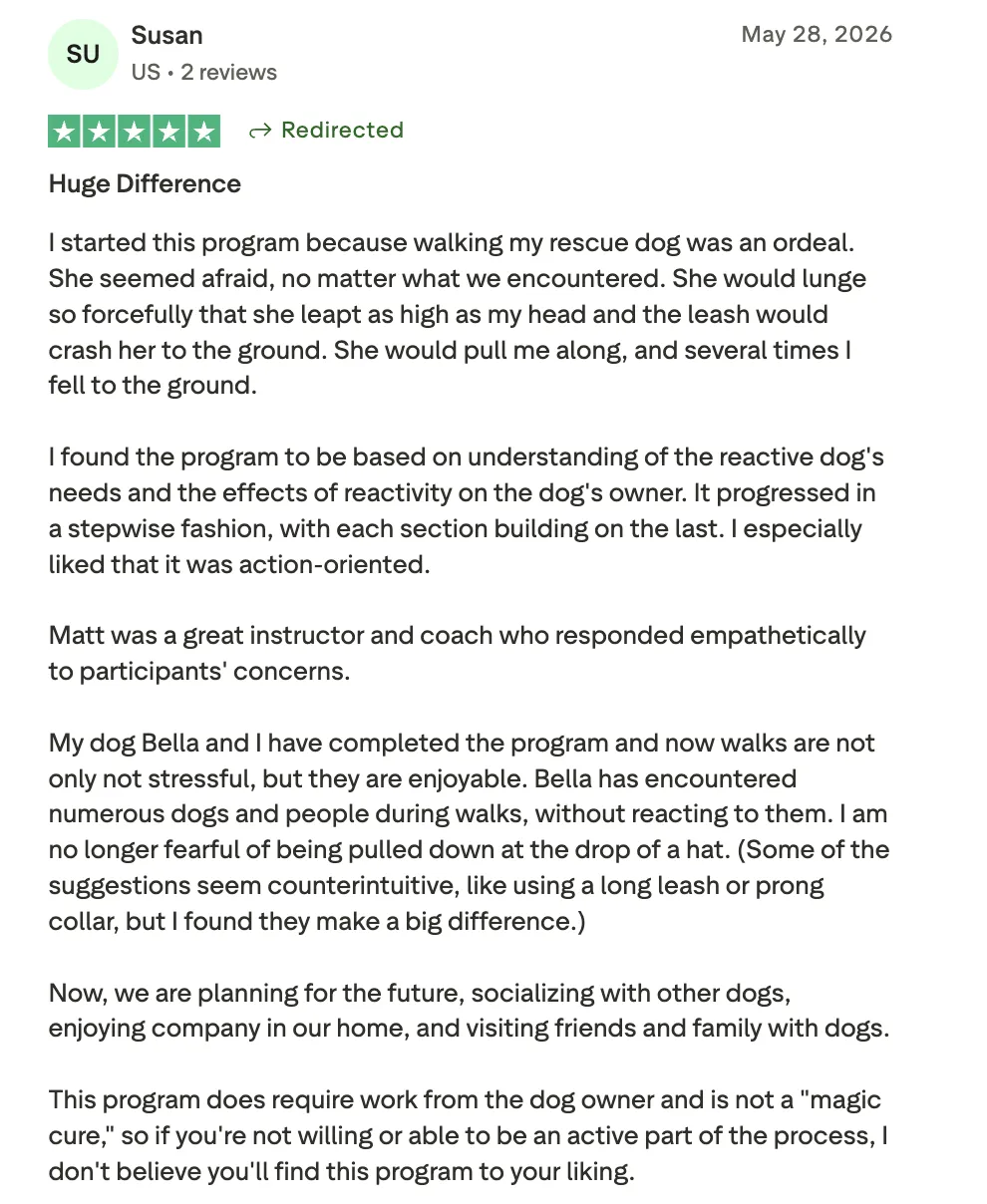
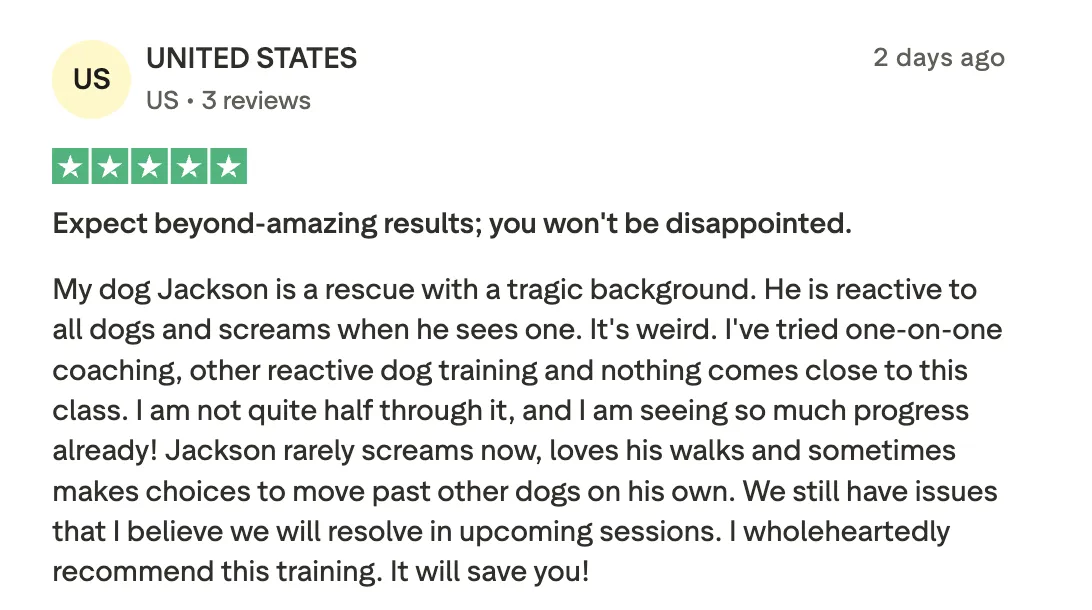
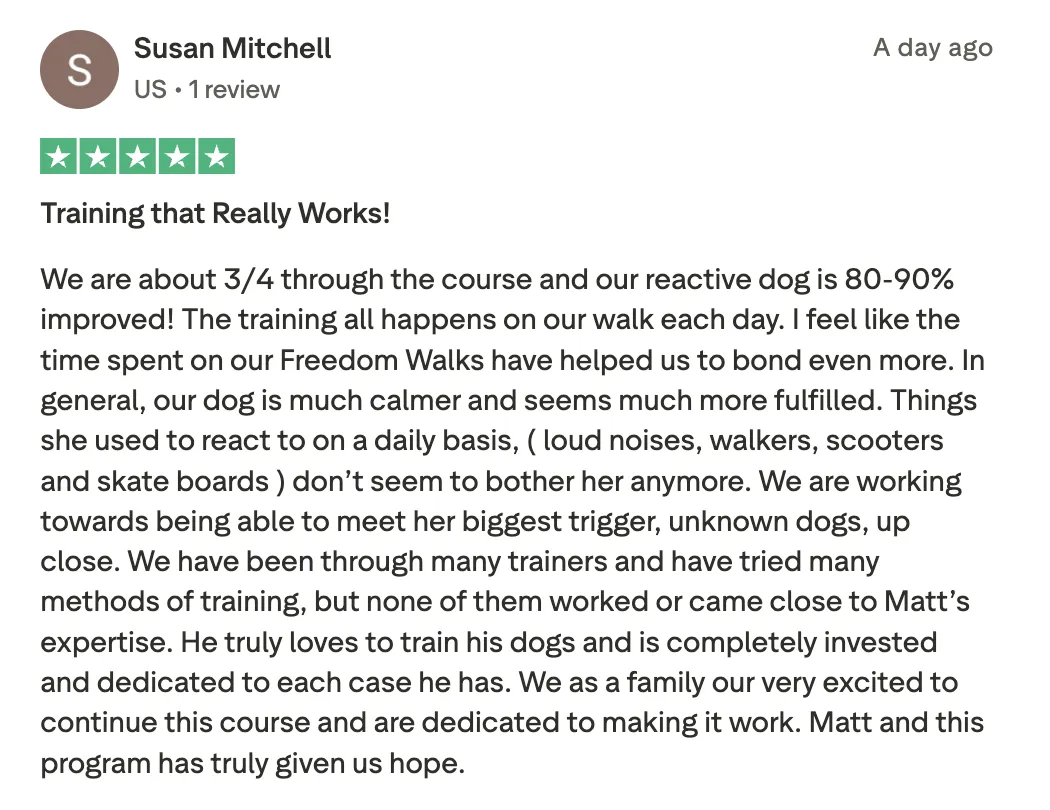
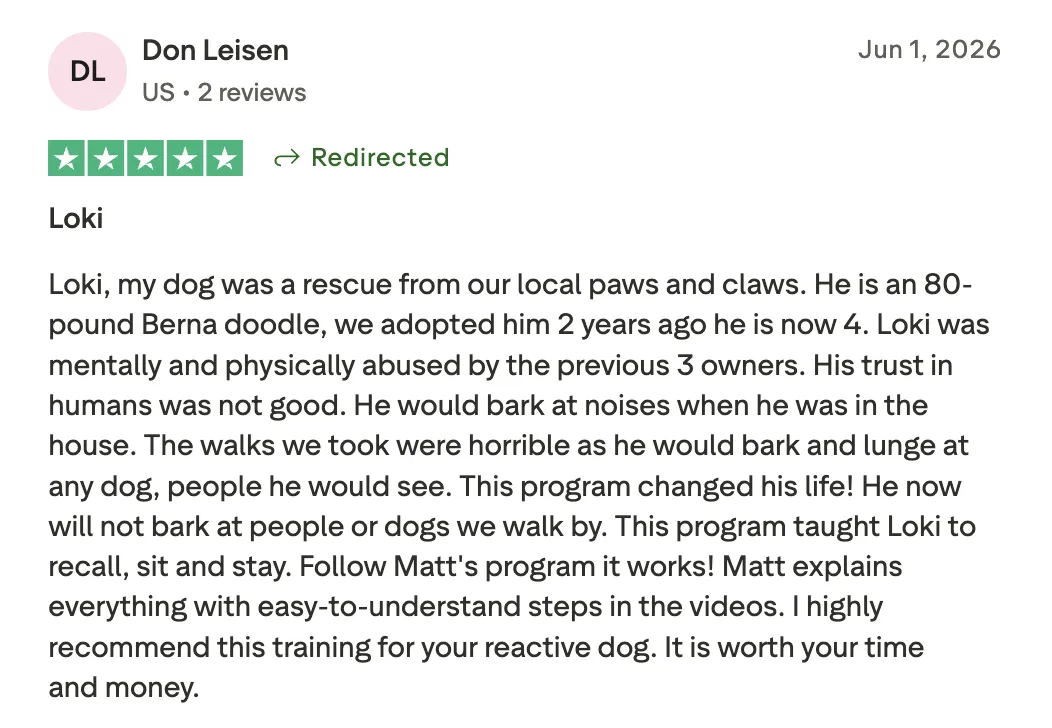
"Your program has been very helpful. I have previous experience but have never trained a puppy who is quite as reactive as the one I'm working with now. I share your understanding of canine behavior and am 100% on board with your methodology. My pup has progressed beautifully! I really appreciate your work. Thanks!"
Katherine ★★★★★
"I have seen some very good changes in Jasper. He is a Siberian Husky/Chow mix and has always been a nervous/sensitive dog and fearful of people and other dogs outside of the family. He is very good with family and with my other dogs. He used to growl and lunge at people and dogs as we would walk in the park. He would growl and cry as he saw activity from the window and then run back and forth nervously throughout the house. People he was not familiar with he would growl and try to lunge when they came into the house. Since I have started the training, his behavior has improved tremendously. He is much more relaxed. He doesn't seem bothered by people or dogs as we walk past them in the park.....even if they growl or bark. I am now able to stop and chat with people when I see them and Jasper will sit calmly by my side. People stop me all the time to ask me about Jasper...he has very striking looks. He isn't darting his gaze back and forth continually to watch for "threats" anymore. It's nice to see him relaxing and enjoying his walks. He hasn't been overagitated at all when he hears outside noises or sees something from the window. Most of the time, the noises and sights don't faze him. Even when he does get a little excited on rare occasions, he can easily be brought back to a relaxed state using calm commands and reassurance. Implementing rules and structure, working on building a trusting relationship with Jasper, developing clear communication with him, and working on building his confidence have gone a long way in changing his behaviors for the better. I am very pleased with his progress."
Lynn ★★★★★
Resolving Reactivity Works For dogs of all:
Breeds
From Chihuahuas to Great Danes, herding dogs to hunting dogs
Ages
From insecure adolescents, to
set-in-their-way seniors
Severity Levels
From nuisance barking to severe lunging and snapping
Backgrounds
From traumatized rescues to ideal family upbringings
Meet Your Trainer: Matt Cochran
(plus a sneak peek into the course)
The video below is pulled straight out of the course itself. It's the third lesson new students watch when they enroll, where Matt introduces himself, his background, and how he ended up specializing in reactivity and aggression rehabilitation.
— You'll get a feel for who Matt is, in his own words, instead of just hearing about him from me
— You'll see exactly what the course experience looks like from the inside (production quality, teaching style, pace)
— And you'll start to understand why I bet my entire business on partnering with him!
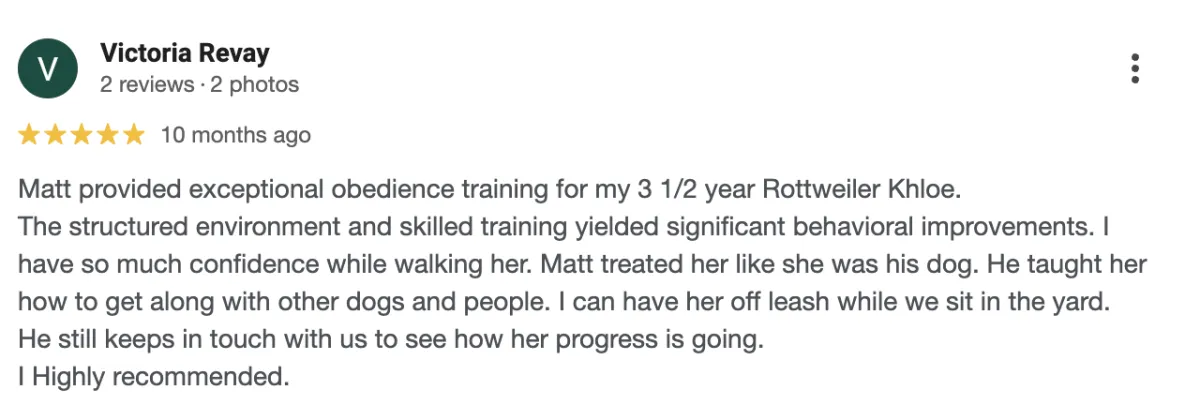
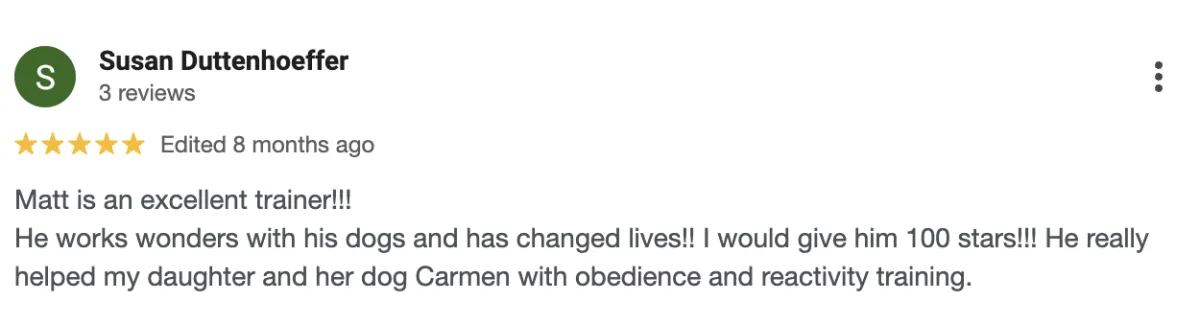
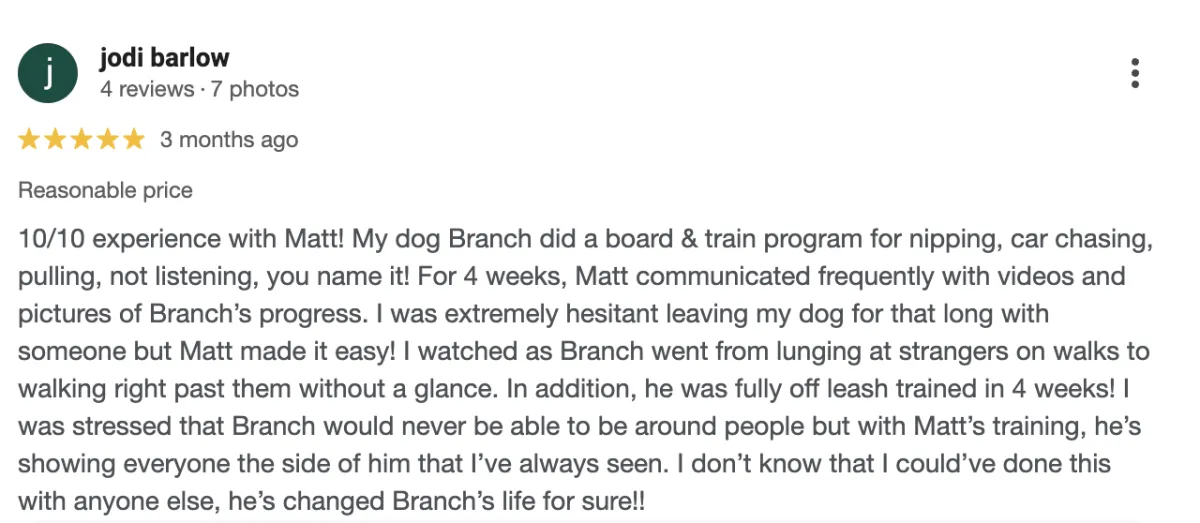
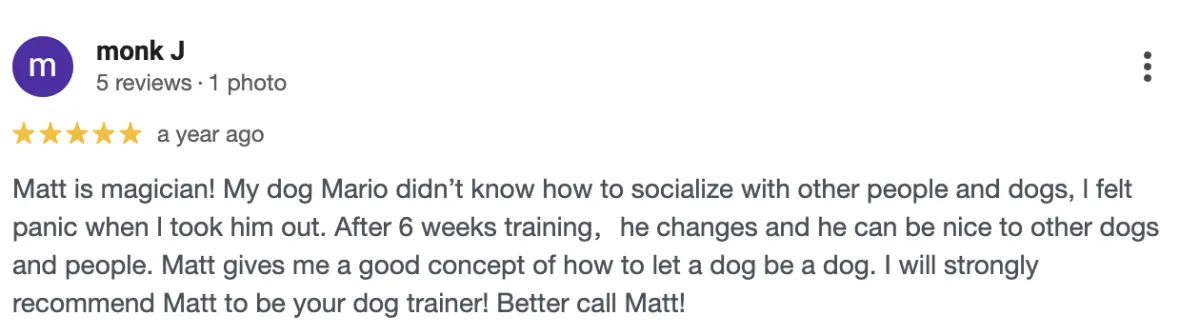
Just some of the many incredible transformations Matt has produced by following this system 👇
Program Curriculum
The course is structured into 7 sections, which you complete in order, at your pace. There is never any rush or pressure.
Each section builds on the last. So instead of dumping everything on you at once and hoping you figure it out, we walk you through one focused piece at a time. You learn it, you practice it with your dog, and then you move on.
This is intentional.
Reactivity isn't fixed by a single technique. It's fixed by a process of building one pillar at a time, stacking them on top of each other. And if you skip ahead or try to shortcut the order, you'll end up frustrated with a dog who's still reactive (we've seen it happen plenty of times).
The other benefit of this structure is that you're not stuck waiting weeks to feel any progress. By the end of Section 1, your daily life with your dog already starts to feel easier. By the end of Section 3, your relationship with them has fundamentally shifted. And by Section 6, you're directly addressing the reactivity head-on with full confidence.
It's a path that meets you where you are, and walks you all the way through to a calm, trustworthy dog.
Here's what each section covers:
You’re Just Weeks Away From The Dream Life You Pictured When You First Brought Them Home
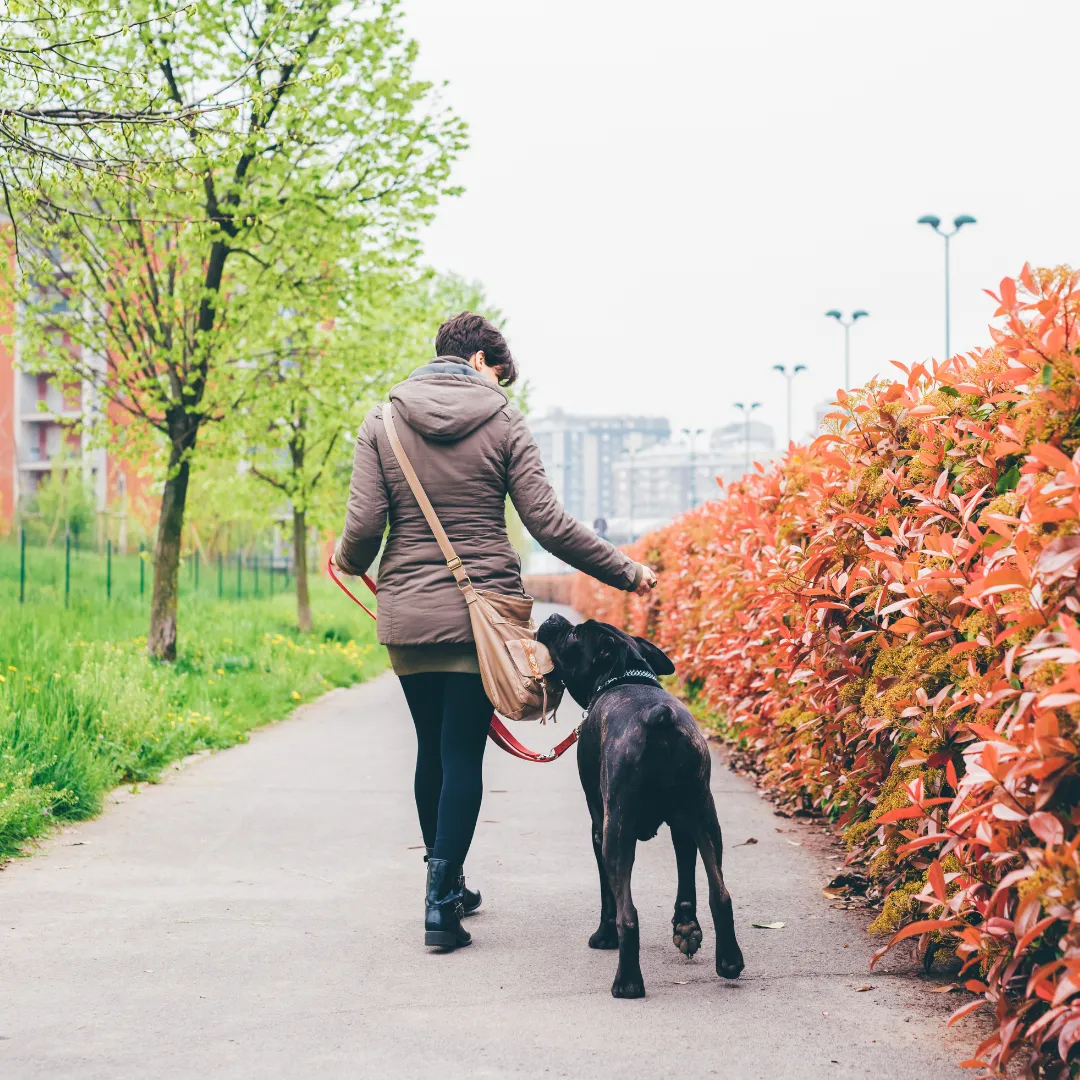
Calm, Relaxing Walks
No more endless pulling, barking, or lunging. Just peaceful strolls—no matter who passes by.
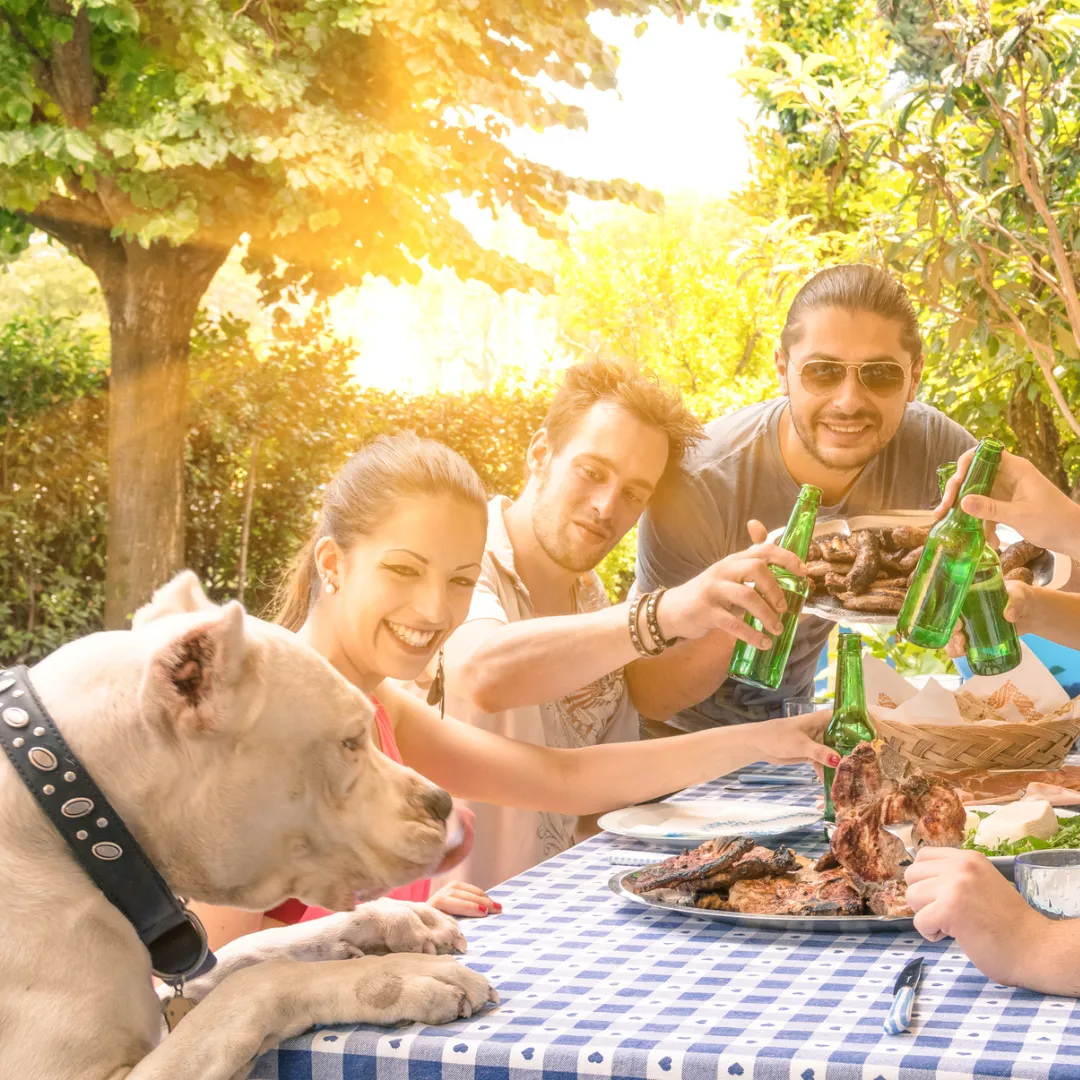
Host Guests Stress-Free
Have family & friends in your home again – without being anxious and on-edge.
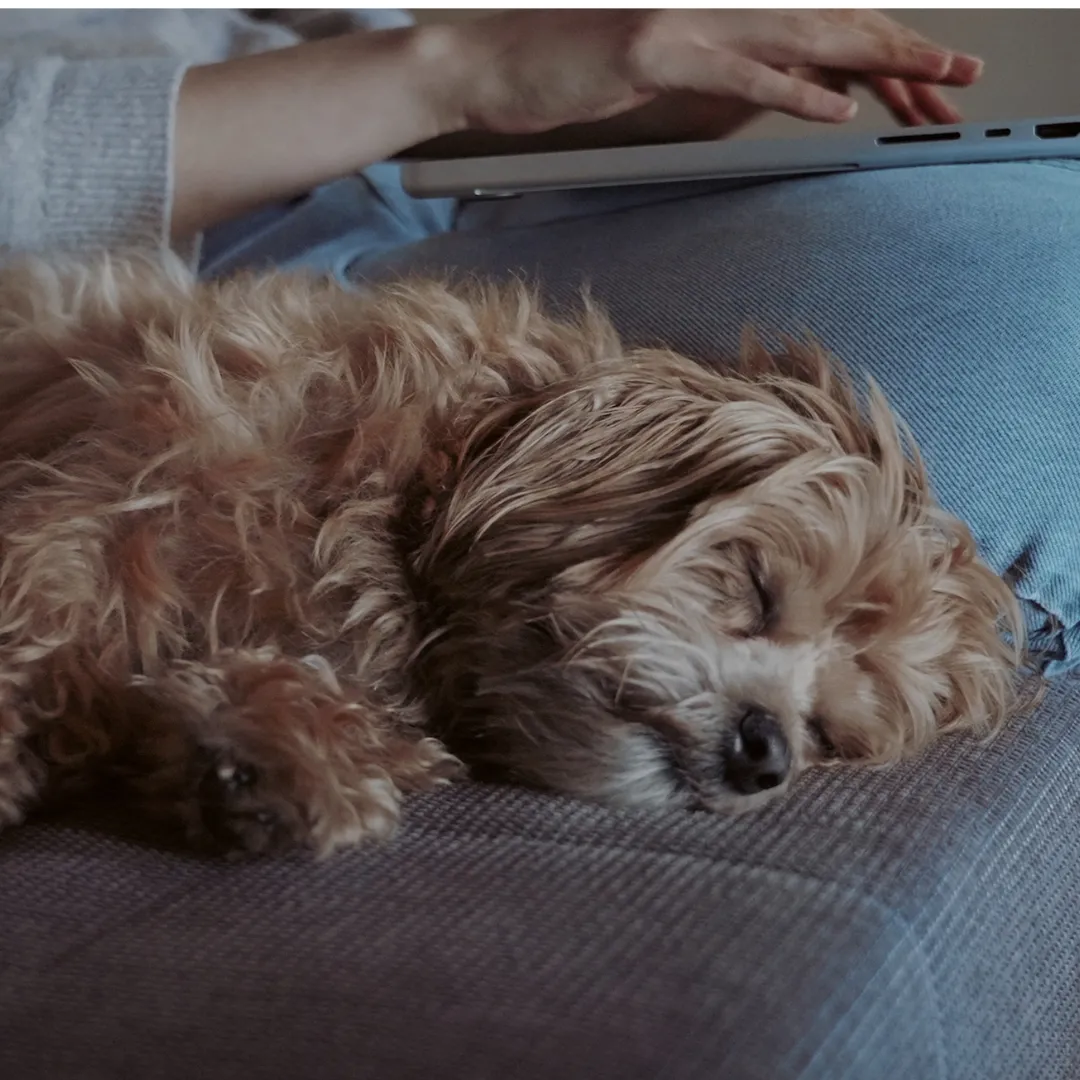
Peace at home.
Relax in your home without pacing, growling, or barking at every little sound.
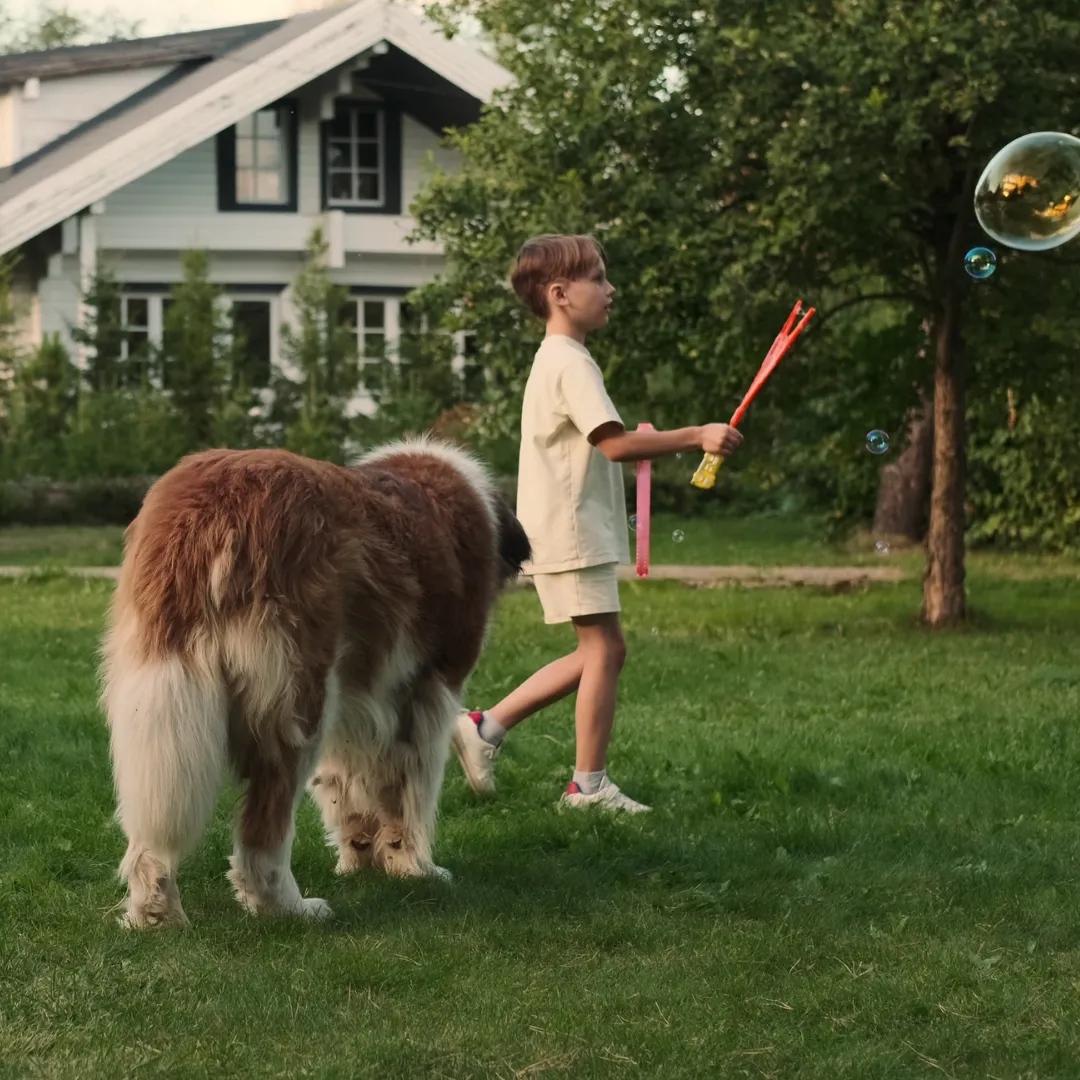
Backyard Freedom All Day
No more fence fighting or obsessive barking. Instead they sniff around and nap in the sun, completely carefree.
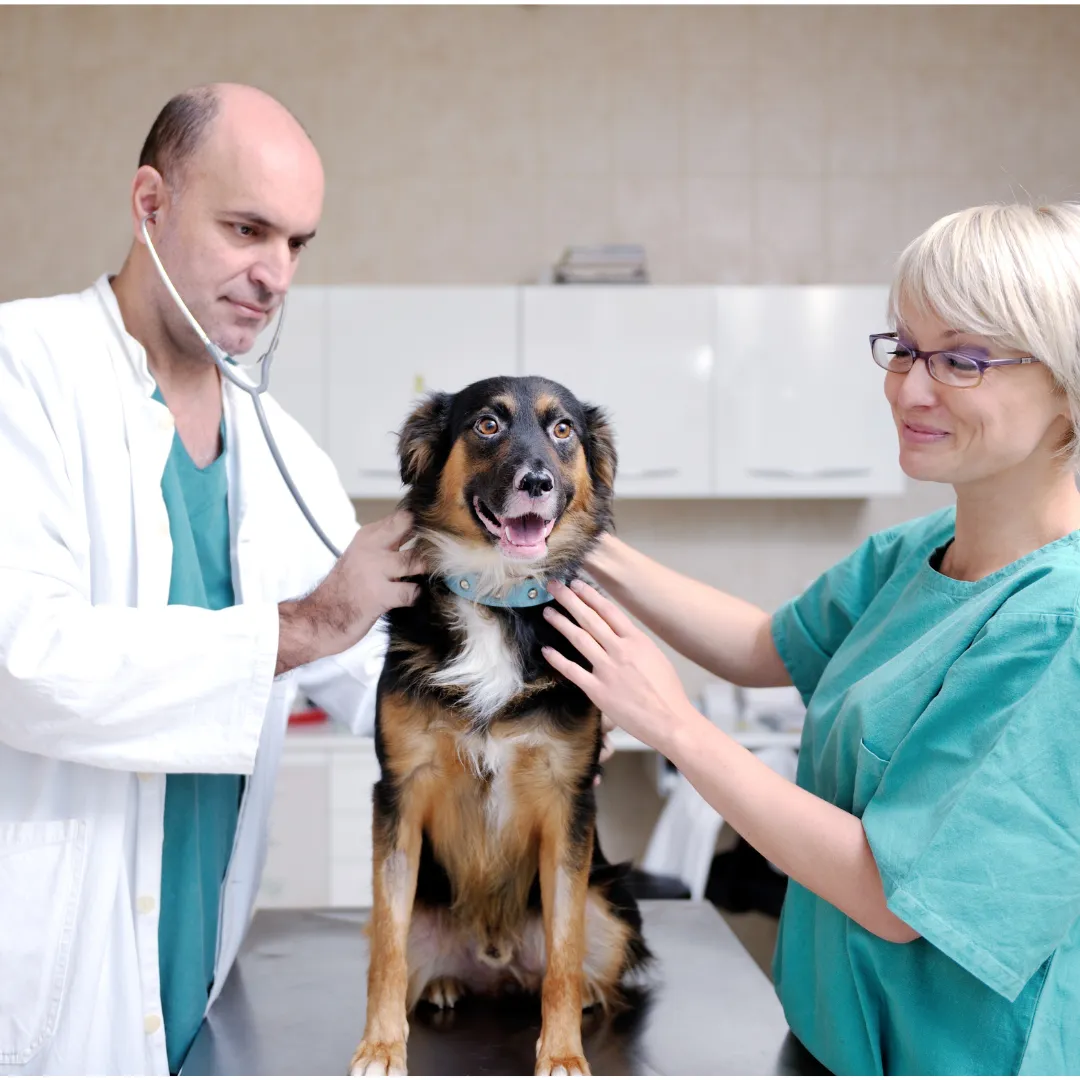
Drama-Free Vet & Groomer Visits
Walk in knowing routine appointments are truly routine, your dog stays calm and cooperative from start to finish.
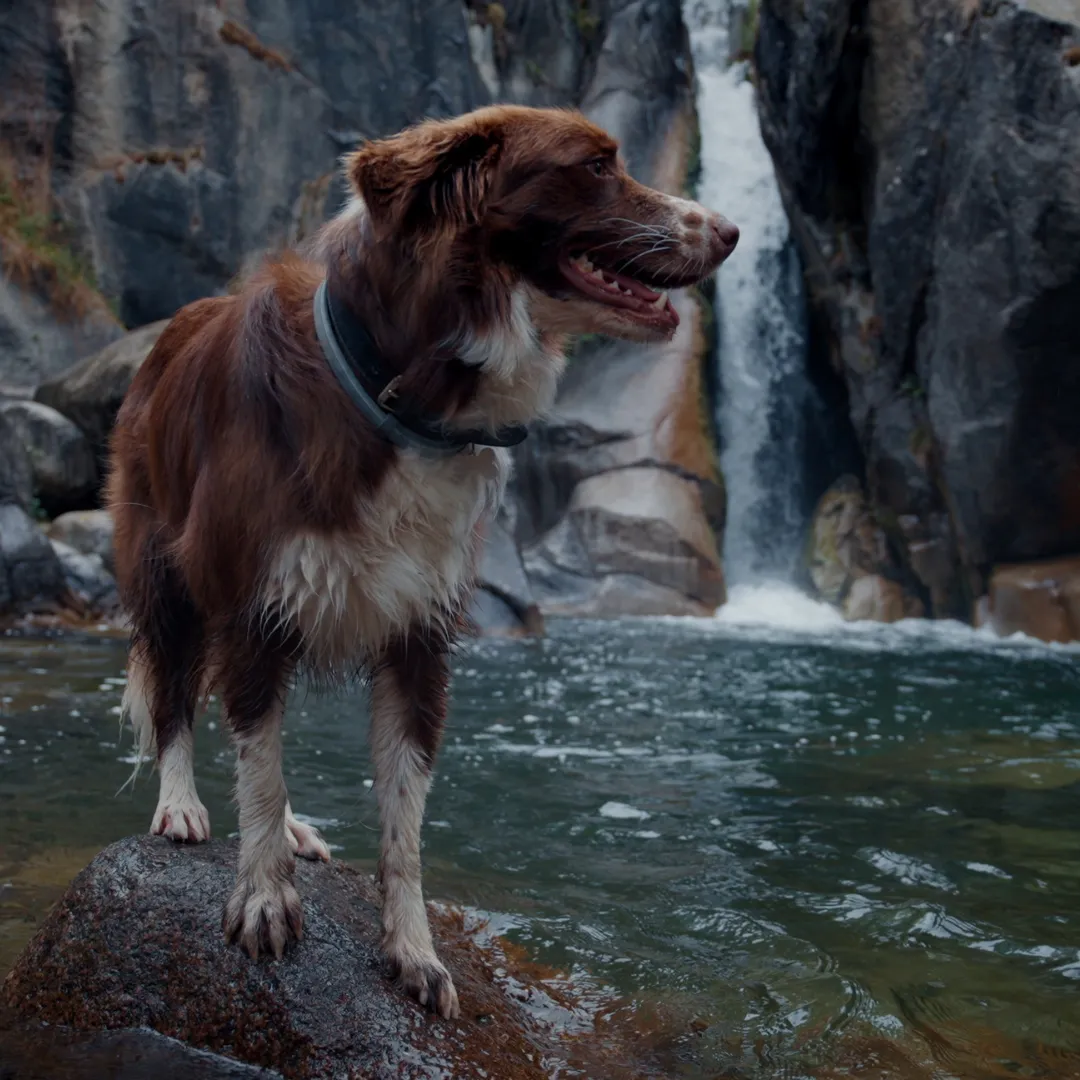
Explore Confidently
Hiking trails, beaches, cafes, farmers markets… you’re both finally enjoying everything life has to offer, together.
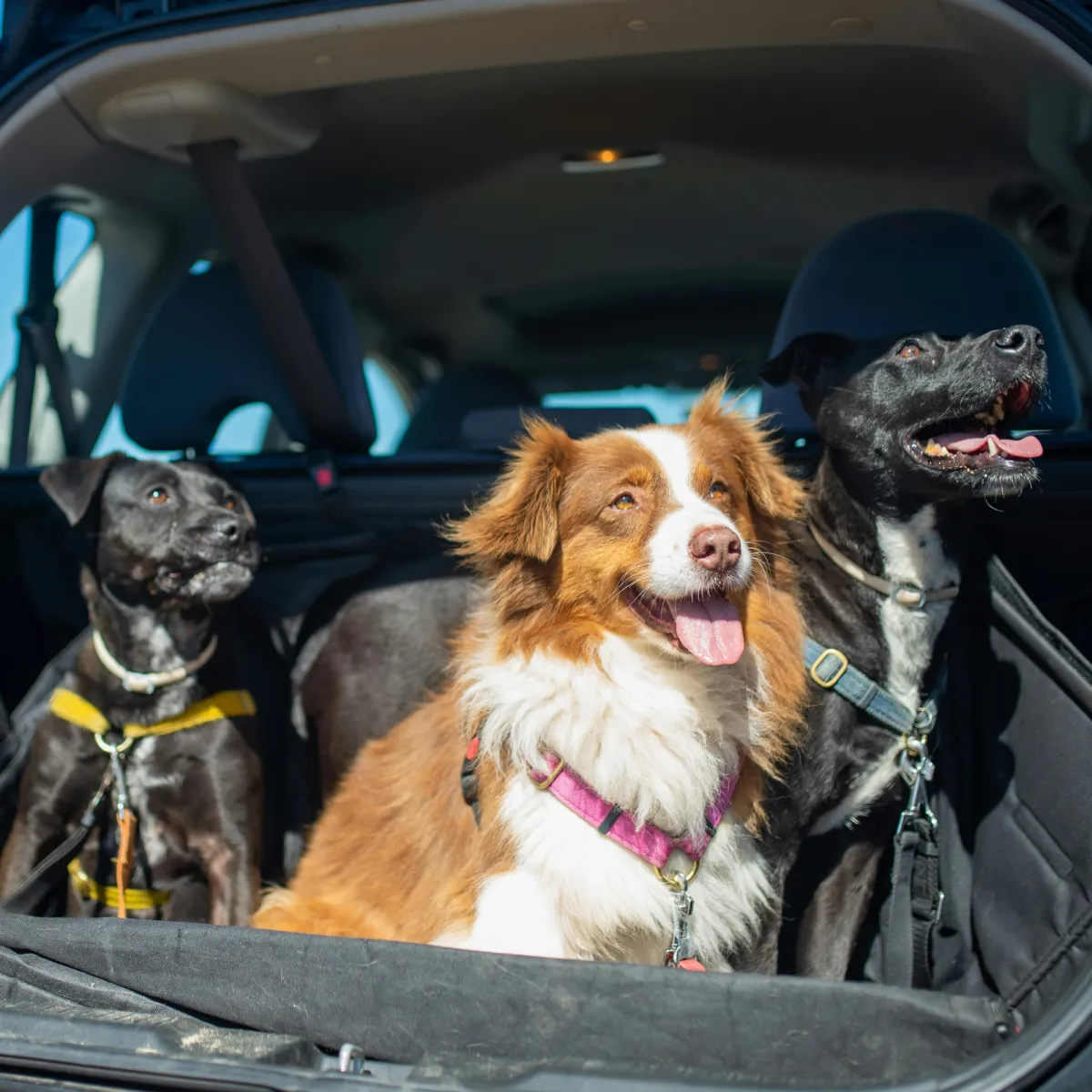
Your Dog Listens To You
When you give a command, your dog complies, even if they'd rather not. Not because they're scared of you - because they trust and respect you.
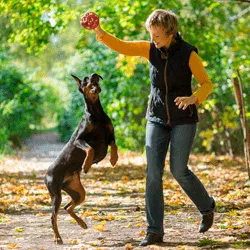
High-Level Handler Skills
You'll learn skills most dog owners (and even some trainers) never develop. And once you have them, no one can ever take them away from you.
Amaze your family, friends, and neighbors.
The people who watched you struggle, who maybe doubted it could get better, who saw you at your most frustrated... they'll ask how you did it!
“Thank You!! I was hesitant at first because of it being online, but It’s helped my poor boy so much and it’s so exciting to see him build his confidence!”
Kim ★★★★★
"I like the program, my young dog is doing well so far. He is doing great with his reaction issues. I am surprised àt how well he is doing. I am so glad that he is improving, and that I bought this program. It has been a lifesaver! Thank you."
Richard & Judi ★★★★★
Too Many People Are Spending Thousands... Sometimes Everything They Have And More... Just Trying To Help Their Dog. And Still Ending Up Lost And Discouraged.
I know because I was one of them.
And I know a lot of you watching this have already spent more than you'd like to admit on trainers, behaviorists, and courses that didn't work.
So accessibility matters to us.
Because here's what fixing reactivity typically costs.
A board and train with a trainer who actually knows what they're doing will cost you $3,000 to $4,000 minimum.
Matt's is $5,000, and there's a waitlist.
If that's out of reach, private lessons are the next option.
Most qualified trainers charge $150 to $250 per session. And you'll need more than one.
If you only do 10 sessions, that's $1,500 to $2,500.
But even if you have the money, finding a trainer who can actually deliver meaningful results is next to impossible.
Most professional trainers are well-meaning.
Most love dogs.
Most are doing the best they can with what they were taught...
But the methods that actually resolve reactivity, and not just manage it, are not widely known yet. And the trainers who've mastered those methods are rarer still.
That's why we wanted to bring Matt's system and his results to people who can't access a trainer like him.
Either because they can't find one, can't afford one, or can't wait 6 months on a waitlist.
So that’s why to enroll in Resolving Reactivity, you don’t have to spend the $5,000 that Matt’s Board & Train costs…
You don’t have to spend the $2,800 that I spent on just 1 of the trainers who failed me...
In fact, you only need to spend 10% of that.
Because the price of the Aggression Academy is just $297, one-time...
But you’ve stuck with me through this entire page.
And that tells me you’re a committed, caring dog owner who would do anything for your best friend.
If that weren’t true, you would’ve clicked away a long time ago.
So if I’m right…
Then it’s my responsibility to do everything I can to make sure you succeed.
That’s why, right now — on this page only — I’m offering you a one-time opportunity:
If you were to go to our main website right now, you’d see The Aggression Academy available for the full price of $297.
But because you’ve proven your commitment by staying here so long…
You can enroll today for just $99, one-time.
That’s just 3% the price of an average 2-week board & train, and less than a single private lesson!
And there's absolutely no monthly fees. No hidden charges.
Just $99 for lifetime access to the program that can give you and your dog the life you’ve always dreamed of — together.
"I had Cash on the long line last night and my friend brought her dog out. Cash was AMAZING!! He would look at the other dog and then look at me. I rewarded him. He never reacted. We were able to go within 5 feet of the other dog. Thank you! Thank you! Thank you!!"
Sue W. ★★★★★



Your Dog Deserves This Chance — So We’re Taking the Risk for You
We’ve seen how life-changing this program can be—for both dogs and their people. But we also understand how easy it is to feel skeptical or hesitant… especially if you’ve tried other things that didn’t work.
So we want to take all the risk off your plate.
Try Resolving Reactivity 100% Risk-Free for 90 Days
When you join today, you’ll get full access to the entire program—no restrictions, no fine print.
Go through the lessons. Apply the training. Start working with your dog using the gentle, proven steps inside.
And if within 90 days, you don’t feel hopeful… or if you aren’t seeing the kind of progress you expected... just send us an email.
We’ll give you a full refund. No hoops. No pressure. No hard feelings.
We can confidently offer this guarantee because we've seen it work for thousands of everyday dog owners. We know that when you follow the system, you get results!
This means one of two things will happen within the next 90 days:
One: You'll witness amazing progress with your dog you never thought possible.
or...
Two: You'll get every single penny back.
Either way—you’re protected. And your dog gets a fair, fighting chance to live the life they deserve.
Not far from now, the moment will come...
Where the elevator door in your building opens up to reveal a couple and their dog waiting for you…
And instead of scurrying away in shame as your dog goes berserk and then taking the stairs…
You’ll stride in without a second thought.
Where your neighbor’s lawn mower roars to life on a Saturday morning…
And instead of waking you up with their fury…
Your dog will barely lift their head before settling back down.
Where the maintenance guy stops by an hour early…
And instead of apologizing profusely as your dog loses their mind in their crate the entire time…
They just lie down calmly, trusting you that everything’s okay.
Where the neighborhood pack of dogs parades past your front window…
And instead of crazed, chaotic barking for 5 minutes straight…
Your dog will simply watch them go by—and then return to their nap.
And in that moment, you'll finally feel it.
The deep satisfaction of knowing that you didn't give up. That you did it... You gave your dog the life they always deserved.
No more judgmental stares from neighbors.
No more side-eyes with whispered comments about “that dog.”
Instead, those same people who used to judge will look at you in disbelief when you tell them,
“Yes, this is the same dog."
That feeling of pride… knowing you did right by your best friend—is just one decision away.
And it starts right now.
Enroll Below And Get Instant Access

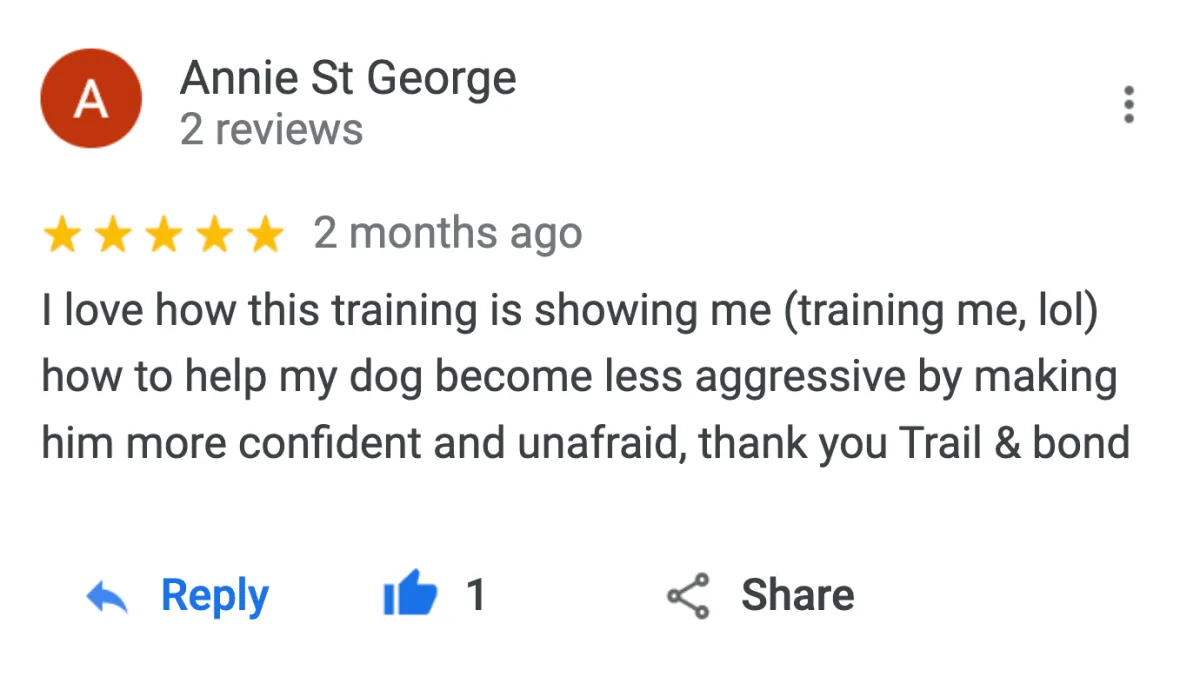
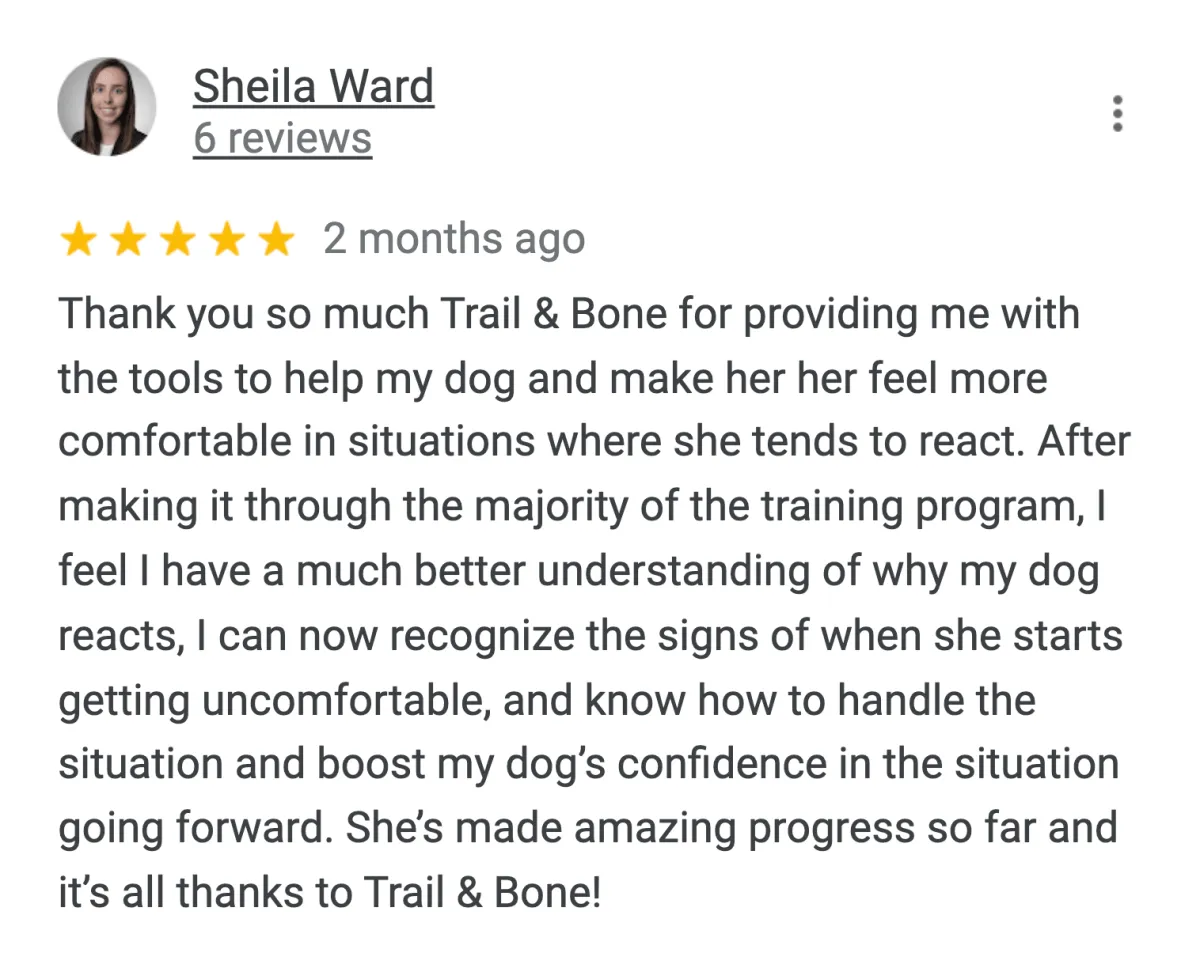
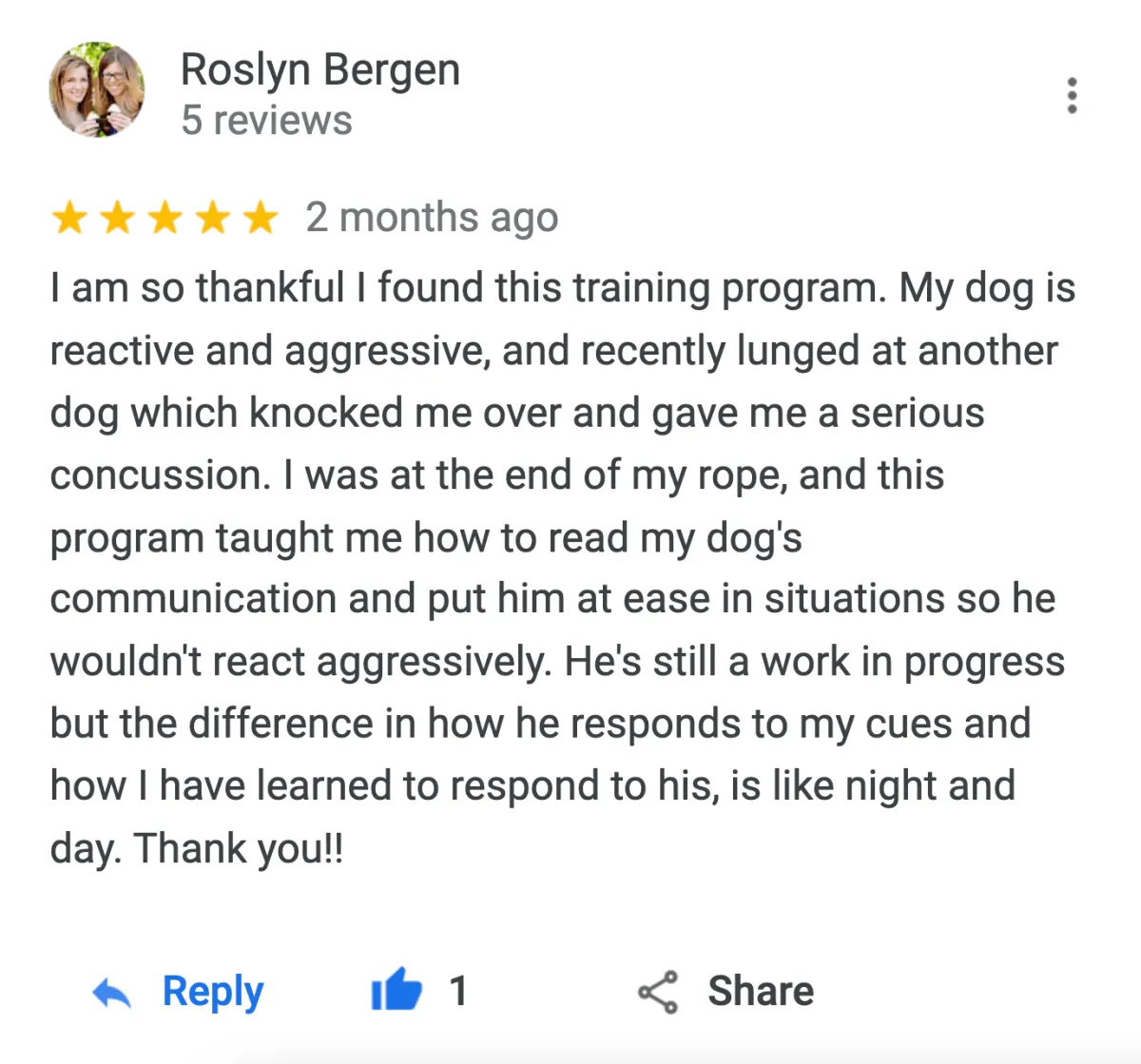
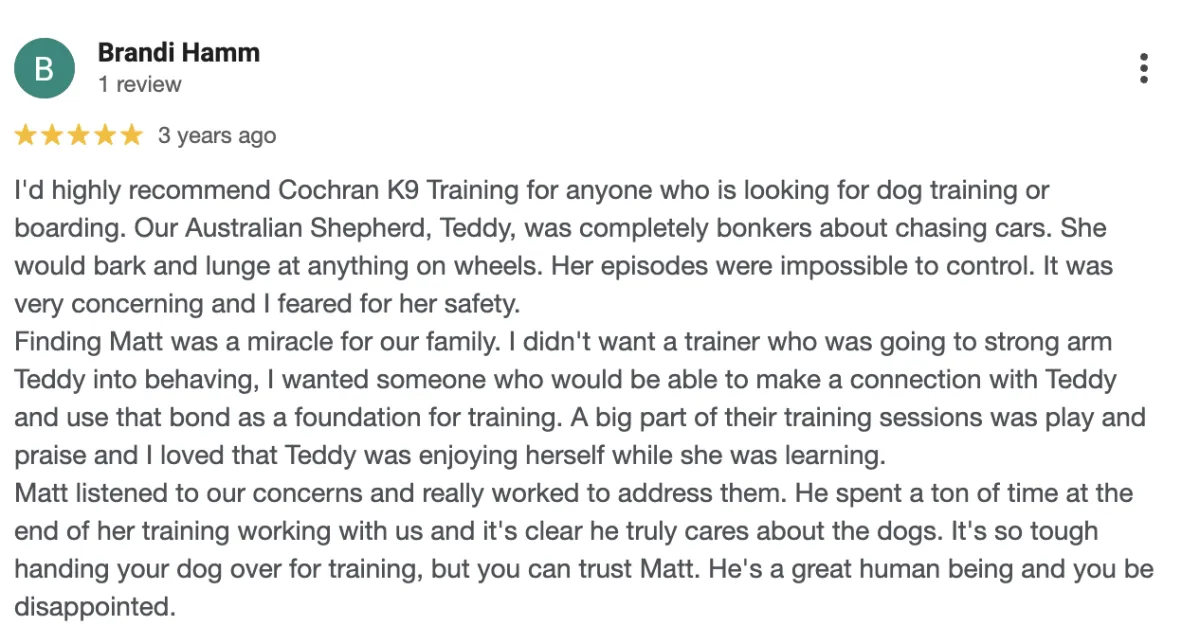
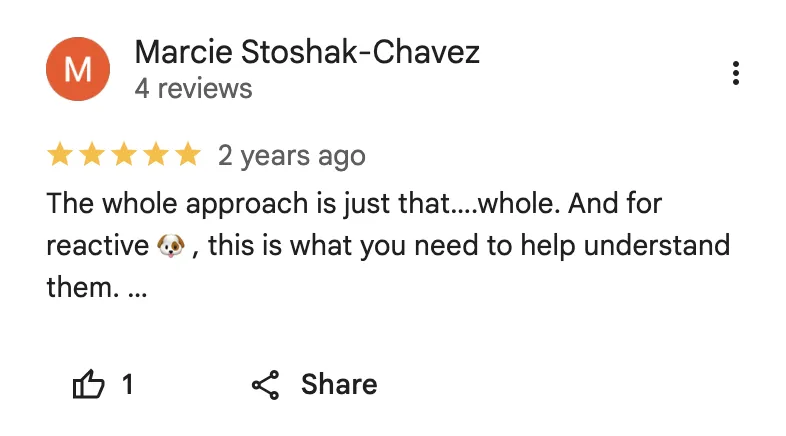
Unfiltered Reviews From Everyday Owners
Note: A few of these reviews are from owners who worked with T&B before we partenered with Matt Cochran and rebuilt the program around his methodology.
We've kept them up on purpose. They speak less to any specific technique someone learned, and more to how we show up for the people who trust us with their dog. That part didn't change when the curriculum did.
The training itself is a real upgrade. That's why we did the work to rebuild it. But the vision behind it, and the way we treat owners who are exhausted and at their wit's end... is what it's always been.
Skipped To The End?
Fair enough! Here's what matters most:
If your dog struggles with:
— Barking, lunging, or pulling on walks
— Reactivity towards strange humans, dogs, or other animals
— Reactivity towards cars, bikes, vacuums, or other objects
— Fence Fighting
— Excessive barking out windows, cars, fences, crates, or other barriers
Then Resolving Reactivity was built for you.
It's a complete, step-by-step program that teaches you the same Inside-Out Approach Matt has used to transform some of the most severe reactivity and aggression cases you'll ever see.
Including dogs other trainers had completely given up on.
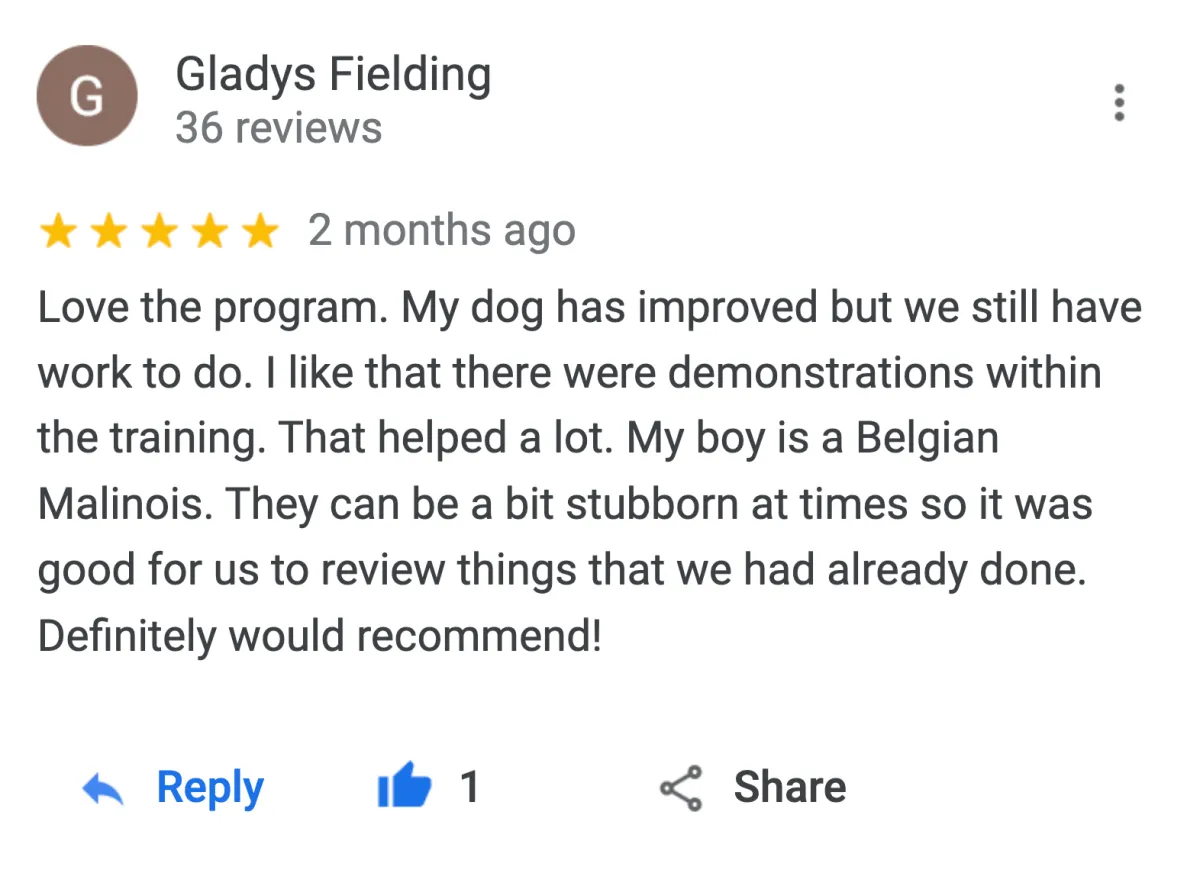
The full course is taught by Matt, on camera, with real demonstrations on real reactive dogs at every step. So you're never left guessing what something is supposed to look like in real life.
On this page only, Resolving Reactivity is just $99, one-time (67% off!)
You also get our 90-day, no-questions-asked guarantee. Try the full program, do the work with your dog, and if you don't see real change... email us and we'll refund every penny. No hoops, no awkward conversations.
The only thing you have to lose is the version of life you're living right now. The walks you dread. The visitors you crate your dog for. The quiet shame of a dog you love but don't always recognize.
That can end.
Click the button below to enroll in Resolving Reactivity and take the first real step toward the life you and your dog deserve. Together.
Need help or have questions?
Contact us at [email protected]
